
The Algorithm That Finds Lost Civilizations: How AI Locates Ancient Sites

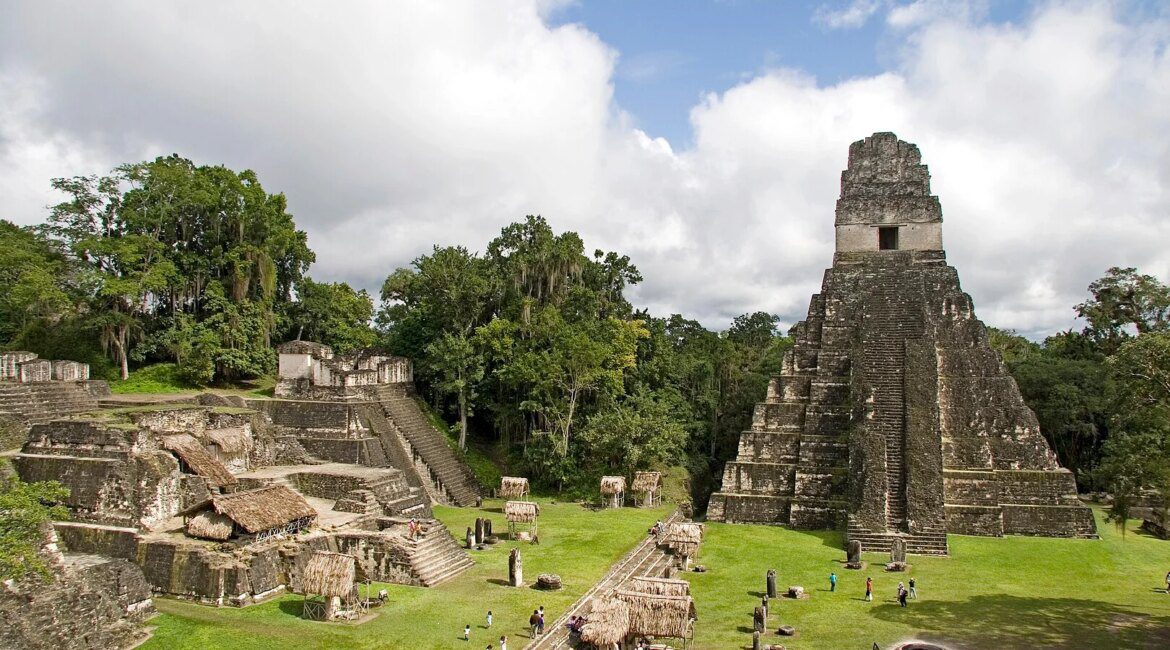
Ancient lost Maya civilization. Credit: Mundo Maya / CC BY-SA 4.0
An algorithm that finds traces of lost civilizations across wide landscapes is giving archaeologists a new way to search for the past. Instead of relying only on field surveys, old records or educated guesses, researchers trained artificial intelligence to spot places where ancient sites are most likely to be hidden.
The study shows how machine learning can turn sparse clues into maps that guide future searches. Lead author Simon Jaxy of Vrije Universiteit Brussel (VUB) and colleagues focused on one of archaeology’s biggest problems: most ancient sites remain unknown, and confirmed site locations are rare.
That makes it hard to train standard AI systems, which usually need large, well-labeled datasets. In archaeology, researchers often know where some sites are, but they do not have clear labels for most of the landscape.
An AI algorithm that finds lost civilizations
To deal with that gap, the team used a semi-supervised deep learning approach. The model learned from known positive sites (places where an archaeological site is confirmed to exist) while also making careful predictions about unlabeled areas (places where we don’t know if a site exists or not). It then improved those predictions as training continued.
The goal was not to mark one object in one image, but to create a broad probability map showing where undiscovered sites may lie.
What if AI could help find lost civilizations? Researchers used deep learning and satellite data to predict where undiscovered ancient sites may be buried.#ArtificialIntelligence #Archaeology #MachineLearning pic.twitter.com/pSkrqUIkNe
— Tom Marvolo Riddle (@tom_riddle2025) March 16, 2026
The researchers tested the system in the Sagalassos study area in southwestern Turkey, a region with steep terrain and a long human history. They used more than 30 years of survey data and examined seven archaeological periods, from late prehistory to the late Ottoman era.
The model worked with two kinds of input. One used terrain-based data from a digital elevation model. The other used raw Landsat 9 satellite imagery, along with historical maps for some periods.
The challenge of sparse archaeological data
The study compared several methods. A basic supervised model performed poorly under the severe shortage of labels. But two semi-supervised versions did far better.
One used dynamic pseudolabeling, which lets the model assign tentative labels to unlabeled areas. The second added a refinement step to make predictions more spatially consistent.
On terrain-based data, the new AI approach matched the performance of LAMAP, a leading archaeological prediction method, and posted higher Dice scores, a measure of how well predictions overlap with known sites. On raw satellite imagery, the model maintained its performance and produced clearer predictive surfaces across the landscape.
A new AI tool for finding ancient sites
The findings suggest that AI-driven predictive archaeology can help researchers search large areas more efficiently, especially where detailed surveys are limited.
The study also points to a practical shift. Older methods often depend on hand-built features and expert assumptions. This system learns directly from the data and can adapt to different kinds of imagery.
The researchers said the work still has limits. Confirmed non-site data remain scarce, and computer-based results still need field checks. Even so, the study suggests AI can do more than process old information. It can help archaeologists decide where to look next.


0 Comments