+30 6937438844-45, +30210 2209901

cavo.petra@yahoo.gr

+28
°
C
High:+28
Low:+21
Sat
Sun
Mon
Tue

EVENTS / PARTY

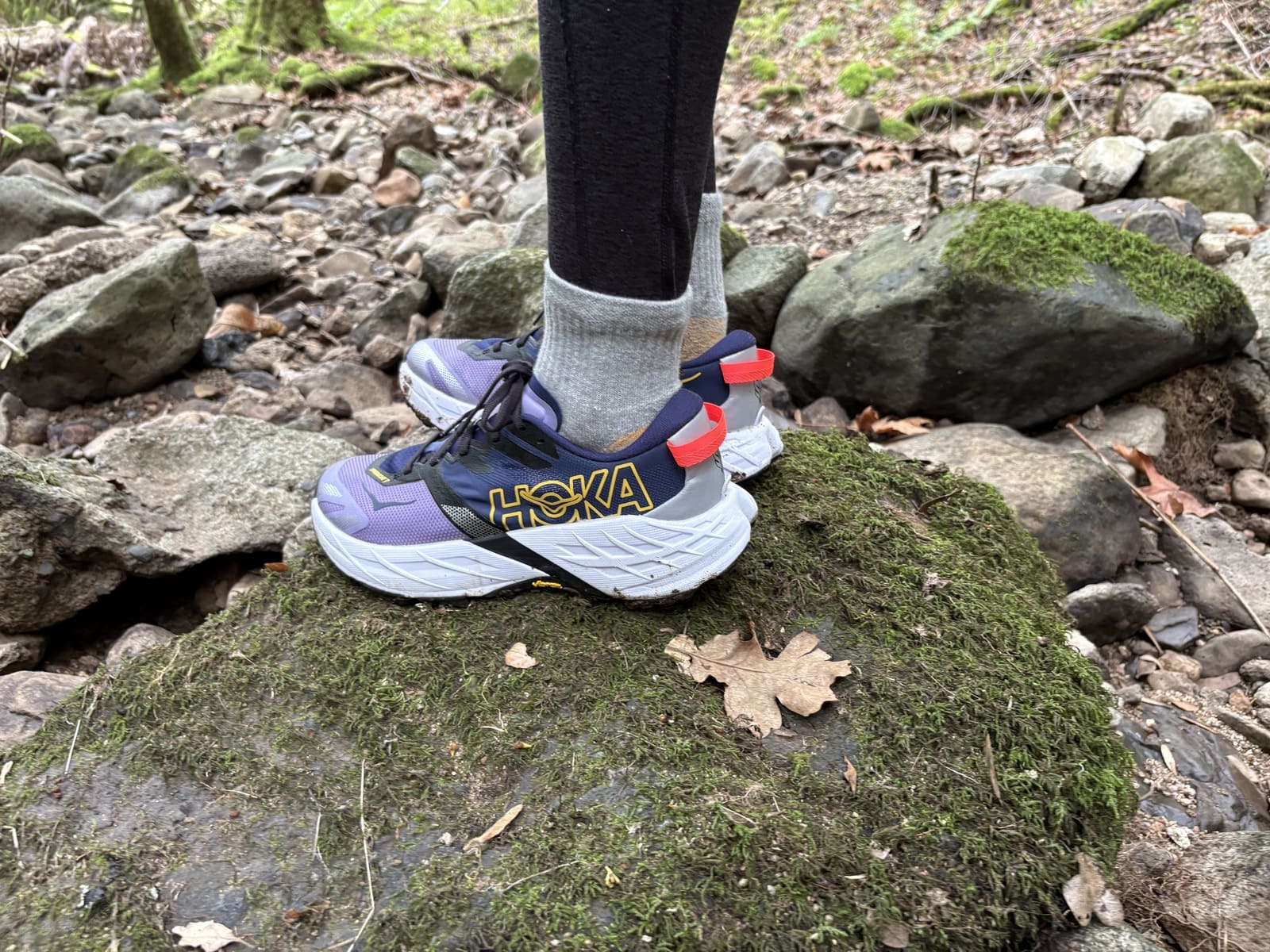
Side profile of a pair of Hoka shoes.

Women’s HOKA Speedgoat 7 Review

The latest Speedgoat 7 features several improvements over the prior version. – Photo Credit: Emily Parnay (CleverHiker.com)

Bottom Line

The HOKA Speedgoat underwent a major overhaul recently, and we think the 7 is a noticeably better performer than the 6. The slightly taller stack height and springier midsole provide better energy return, added stability, and enhanced comfort without sacrificing ground feel. The new multi-directional lugs offer even better traction, inspiring confidence on steep terrain, muddy trails, and slippery surfaces. The renovated uppers enhance durability, while the retooled heel collar and flat tongue provide much-appreciated comfort upgrades over the prior version.

Thanks to their outstanding support and responsive cushioning, the Speedgoat 7s stood up well to countless miles over varied terrain in northern California. For those who value comfort, traction, and well-rounded performance in a lightweight package, the latest Speedgoat is an easy choice. For other top recommendations, check out the rest of our lineup in our best women’s hiking shoes gear guide.

How We Tested

We tested these shoes on several three- to five-mile hikes in late winter across northern California, where we were able to analyze their performance on rock, wet versus dry trails, and mud. We evaluated weather resistance by stepping into a creek and submerging the upper for several seconds, and traction was tested on terrain from slippery rocks to technical singletrack and muddy descents. We weighed the shoes on our scale, analyzed each feature, and paid close attention to long-term comfort and durability. 

Quick Specs

Women’s HOKA Speedgoat 7

Best Hiking Shoes for Stability


CleverHiker Rating:

4.7/5.0


Price:

$165


Weight (Pair):

1 lb. 0.6 oz.


Heel-to-Toe Drop:

5 mm

Pros

  • Responsive and springy midsole
  • Lightweight
  • Excellent traction
  • Roomy toe box
  • Breathable
  • No break-in needed
  • Updated heel collar for comfort

Cons

  • Can feel a bit clunky
  • Polarizing colorways

Comfort

In terms of comfort, the HOKA Speedgoat 7 offers several improvements over the prior generation. The slightly taller stack height and more responsive, springier midsole provide excellent shock absorption, energy return, and out-of-box comfort. After miles of hiking, our feet felt supported and protected with no areas of discomfort or rubbing. We were particularly pleased by the reengineered heel collar – though it used to dig into our ankle, the latest cup wraps comfortably around our heel. 

Although the shoes look a bit clunky and feel slightly bulky, the roomy toe box and extra support underfoot are a boon on long trail days. We also love the flat-lying tongue, which seamlessly hugs the upper foot. There were no areas of discomfort when bending our feet and toes, as the upper material is sturdy but not uncomfortably stiff. Overall, we came away incredibly impressed by the updates to the Speedgoat 7s.

These shoes offer solid out-of-the-box comfort with a roomy toe box and improved heel cup. – Photo Credit: Emily Parnay (CleverHiker.com)

Traction

Traction is where the Speedgoat 7 truly shines. Though past versions were impressively grippy, the latest model features even stickier tread that truly impressed us on all terrain. The Vibram Megagrip outsole with 5-millimeter lugs inspired rock-solid confidence on everything from loose gravel to muddy paths. From steep inclines or technical descents and everything in between, we experienced zero slippage in the shoes.

When crossing creeks and rock-hopping across wet rocks after recent rainfall, the Speedgoat 7s provided reliable traction and stability – a noticeable upgrade over many other hiking shoes on the market. The lacing system also keeps our feet secure and stable within the shoe, which is particularly helpful on off-camber and technical terrain.

The revamped lug design and sticky tread provide excellent traction on all terrain, including mud. – Photo Credit: Emily Parnay (CleverHiker.com)

Weight

The Speedgoat 7s are slightly heavier than the prior version as a result of all of the updates, but we feel the small penalty is worth it. For reference, our pair in a women’s size 8.5 weighed in at 1 pound 0.8 ounces on our scale (they are listed at 1 pound 0.6 ounces), which is still extremely light for a trail shoe. 

The midsole is made with a new supercritical foam compound that offers a springier and more responsive bounce with each step. Compared to thick, plush cushioning, the supercritical foam provides more energy return while still offering decent ground feel. And the lightweight build doesn’t compromise stability, making the Speedgoat 7 a great choice for covering varied terrain over long distances.

Coming in at just 8.4 ounces per shoe, the Speedgoats are a lightweight option for the trail. – Photo Credit: Emily Parnay (CleverHiker.com)

Durability

The Speedgoat 7’s makeover makes it even more robust than previous models. After several miles of hiking over varied terrain in northern California – from rugged and rocky singletrack to muddy trails after a recent rainstorm – the shoes held up impressively well with no damage to the upper or outsole. 

The retooled woven upper is less stretchy than previous models, providing better longevity, while the reinforced toe cap provides solid protection against direct hits to rocks or stumps on the trail. HOKA also added a gaiter integration to help seal out weather and debris. 

These shoes feature an upgraded woven upper, high-quality seams, and a protective toe cap. – Photo Credit: Emily Parnay (CleverHiker.com)

Weather Resistance

The Speedgoat 7 held up well in most weather conditions, though breathability could be better in extreme heat. We tested water resistance in the field by stepping through a shallow creek and holding the top of our foot under running water for several seconds. Although it appeared to absorb into the upper upon contact, moisture did not reach our socks.

 The shoes also dry out quickly, which is good news if you happen to douse them on the trail. Overall, we consider the Speedgoat 7 well suited for most trail conditions, but those who spend a lot of time navigating water crossings or hiking through snow may want to consider a fully waterproof shoe or boot.

The tightly woven uppers and outsoles resist moisture well, even without waterproofing. – Photo Credit: Emily Parnay (CleverHiker.com)

Should You Buy the HOKA Speedgoat 7?

The HOKA Speedgoat 7 is a great match for those who value long-distance comfort, confidence-inspiring traction, and responsive cushioning. It’s still a trail running shoe, meaning long-term durability and support are a little lacking compared to more robust hiking shoes, but it’s competitively lightweight and offers more well-rounded performance than many trail runners. We think the updates to the latest model made a big improvement, including increased comfort, responsiveness, and grip compared to prior versions. 

If weather resistance is at the top of your priority list, it’s likely worth opting for a waterproof shoe or boot (the Speedgoat 7 is not available in a waterproof version yet, but past versions were offered with Gore-Tex). Further, the taller stack height can lead to a slightly bulky and clunky feel on technical terrain, although the lacing system and updated collar design help maximize security. Overall, we really like these shoes for lightweight, long-distance comfort.

While very comfortable and supportive, these shoes do feel a bit bulky with their taller stack height and larger shape. – Photo Credit: Emily Parnay (CleverHiker.com)

What Other Women’s Hiking Shoes Should You Consider?

If you like the HOKA Speedgoat 7 but want to consider other options, take a look at a few of our picks below, or head to our gear guide to the best women’s hiking shoes for a wider look at the landscape.

Topo Athletic Ultraventure 4 Review: The Ultraventure 4s are a great option if you’re looking for something lightweight and breathable with excellent grip. They blend the cushioning of the Speedgoats with a natural foot shape similar to the Altra Lone Peaks. They’re great for long hikes on established paths but might feel a bit unstable off trail.

Merrell Moab Speed 2 Review: If you want to keep things light without sacrificing protection, the Moab Speed 2 is an intriguing alternative. These shoes are a few ounces heavier than the Speedgoats but come with upgrades like a rock plate and added rigidity. The Speedgoat is nimbler and easier to run in, while the Moab Speed is more of a hiker than a trail runner.

Saucony Peregrine 16 Review: The Peregrine 16 is our go-to for lightweight trail running. It offers exceptional traction and breathability, making it an excellent choice for high-mileage days. The Peregrine runs a little narrow and won’t hold up to rugged trail use over the long term, but the slipper-like comfort is hard to beat for covering long distances on maintained trails.

The flat tongue design and secure lacing system offer a customized fit. – Photo Credit: Emily Parnay (CleverHiker.com)
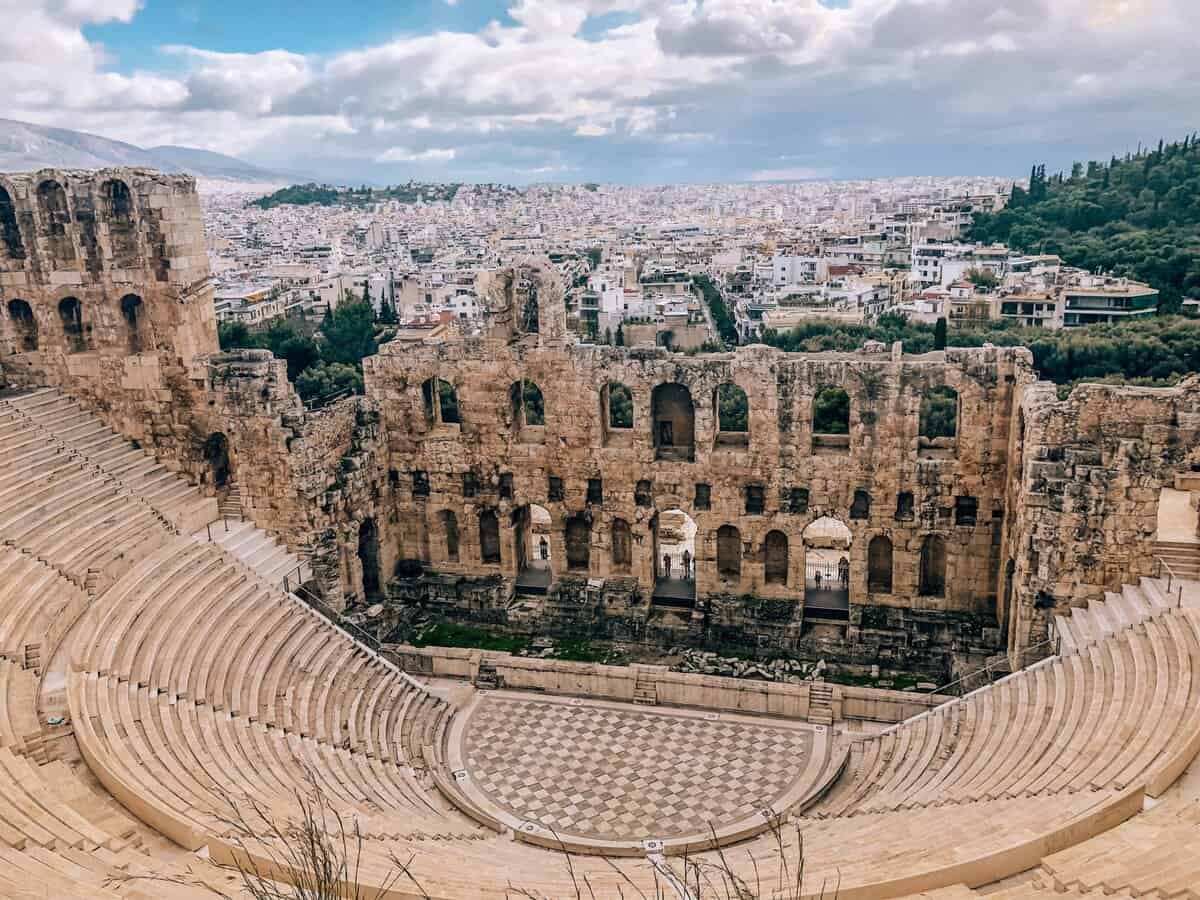
Odeon of Herodes Atticus

A Grand Farewell Before Restoration

For one final month in June 2026, the iconic Odeon of Herodes Atticus will open its gates to the public before closing for a multi-year restoration project.

The Athens & Epidaurus Festival has prepared a rich and emotionally charged program titled “Farewell Celebrations” — a fitting tribute to one of the world’s most beautiful ancient theatres.

Artistic Director Michael Marmarinos described the special month as turning a temporary closure into a unique artistic opportunity: “Every night on the stage of the Herodion will be a special Farewell Celebration.”

Program Highlights

The June program blends classical music, avant-garde performances, Greek musical tradition, and theatrical depth under the illuminated Acropolis.

June 3
Víkingur Ólafsson
The acclaimed Icelandic pianist makes his Greek debut with works by Bach, Beethoven, and Schubert, featuring music from his Grammy-winning album.

June 4
Blade Runner Live
Ridley Scott’s dystopian masterpiece is screened in HD while Vangelis’ legendary soundtrack is performed live by the Avex Ensemble.

June 5–6
Stavros Xarchakos: “In the Present”
The beloved composer returns with a multi-layered concert featuring Lina Nikolakopoulou, Iro Saia, Dimitris Basis, and young musicians from Syros.

June 9
Epirus
A heartfelt tribute to the late Petroloukas Chalkias, featuring 20 young musicians and veteran performers celebrating the soul of the Epirus clarinet tradition.

June 10 & 17
Manos Hadjidakis: “America” (Parts 1 & 2)
Two special concerts honoring the 100th anniversary of the great composer’s birth, featuring the Athens State Orchestra, Raining Pleasure, and pianist George-Emmanuel Lazaridis.

June 12–13
Stamatis Kraounakis: “Lysistrata”
A humorous operetta based on Aristophanes’ comedy with Dimitra Galani and Lena Ouzounidou.

June 15
Arvo Pärt
The Tallinn Chamber Orchestra and Estonian Philharmonic Chamber Choir perform mystical works under the direction of Tõnu Kaljuste.

June 18
Einstürzende Neubauten
The German industrial pioneers bring their raw, metallic sound to the ancient marble theatre in a historic avant-garde encounter.

June 19
Lena Platonos & Maria Farantouri: “Fate”
A unique evening exploring ancient Greek poetry through the music of Lena Platonos and the legendary voice of Maria Farantouri.

June 22
Lykke Li
The Swedish indie-pop star makes her long-awaited Greek debut.

June 25–26
Stathis Livathinos: “Hecabe – In the Shadow of the State”
A bold theatrical performance combining Euripides’ Hecuba with Plato’s Republic (Myth of the Cave).

June 29
Gustav Mahler: Symphony No. 8 “Symphony of a Thousand”
The grand finale — the Athens State Orchestra under Michal Nesterovich performs Mahler’s monumental masterpiece.

Click here for more info https://www.aefestival.gr/?lang=en

Tags:
Acropolis concerts, Ancient theatre restoration, Arvo Pärt Athens, Athens Epidaurus Festival 2026, Blade Runner Live Athens, Einstürzende Neubauten Herodion, Farewell Celebrations Herodion, Gustav Mahler Athens, Herodion June 2026, Herod’s Odeon, Lykke Li Greece, Manos Hadjidakis 2026, Odeon of Herodes Atticus, Stavros Xarchakos, Vikingur Ólafsson Greece

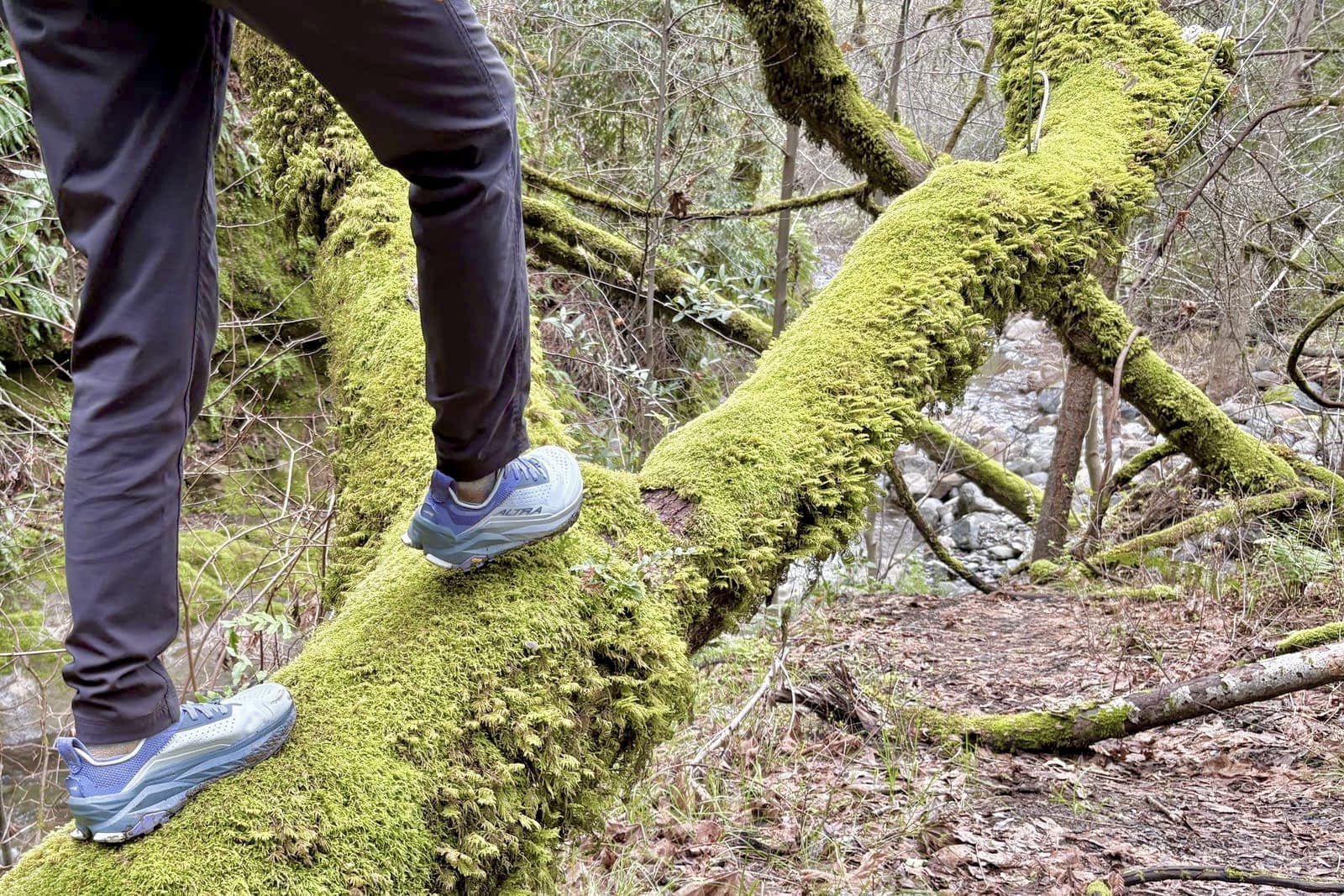
A woman walks across a mossy log.

Women’s Altra Olympus 6 Review

We love the feel of the Olympus, with its wider toe box, zero-drop height, and natural shape. – Photo Credit: Emily Parnay (CleverHiker.com)

Bottom Line

Technically designed for trail running, the Altra Olympus 6 is an excellent hiking shoe that’s comfortable, durable, and protective on long-distance treks. In terms of fit, it’s best suited for those with wider feet from heel to toe, although the lacing system can be snugged down for a secure fit. Our gear analyst has hiked in Olympus models for years, covering hundreds of miles over several generations of the shoe, and she continues to be impressed by their support and resilience on challenging terrain.

Overall, the Olympus 6 is an excellent choice for hikers looking for more support, structure, and durability than Altra’s popular Lone Peak. It is best suited for dry, rocky trails and those with wider feet. If you’re looking for solid water resistance, quick drying time, or unfaltering grip on slippery terrain, it’s worth checking out other models in our lineup of the best women’s hiking shoes.

How We Tested

We tested the Altra Olympus 6s throughout the northern California State Park system, analyzing their performance over several miles on gravel, wet and dry rock, creek crossings, and singletrack trails. We studied every feature of this shoe to determine its value, including the unique padded heel cup (dubbed the Achilles pillow), signature zero-drop design, natural FootShape, flared heel, and braking lugs. 

On the trail, we assessed comfort, durability, traction, weight, and weather resistance through side-by-side testing with other top-performing hiking shoes on the market. We tested the shoes in both wet and dry conditions, even submerging them in water to gauge their moisture resistance and drying time.

Quick Specs

Women’s Altra Olympus 6

Best Hiking Shoes for Long-Distance Treks


CleverHiker Rating:

4.6/5.0


Price:

$185


Weight (Pair):

1 lb. 5.9 oz.


Heel-to-Toe Drop:

0 mm

Pros

  • Wide toe box and zero-drop design lend a very natural feel
  • Excellent protection, stability, and durability
  • Secure lacing system
  • Good comfort out of the box
  • Breathable
  • Excellent grip on dry terrain

Cons

  • A bit slippery in wet conditions
  • Narrow heels may slip in the shoe
  • The Achilles pillow is a little polarizing
  • Not water-resistant and doesn’t drain well when submerged

The Olympus offers a secure lacing system that keeps your foot in place. – Emily Parnay (CleverHiker.com)

Comfort

With a wide toe box, foot-mimicking shape, zero-drop design, and taller stack height, the Altra Olympus 6 offers outstanding out-of-box comfort for covering long distances. The midsole is stiffer than it is plush, but this adds to the shoes’ longevity, ground feel, and overall responsiveness. The shoe also comes with a unique padded heel cup called an Achilles pillow. We found this feature a bit bulky and awkward initially, but once we hit the trail, we barely noticed it.

The Olympus does run a bit larger in the heel, which can cause our foot to slip if the lacing system isn’t snugged down properly (including using the additional eyelets at the top for extra security). It’s also a little clunkier than Altra’s popular Lone Peak, although you get better stability, protection, and durability. We also experienced less foot fatigue compared to the Lone Peak.

The Olympus 6 is very comfortable out of the box. – Photo Credit: Emily Parnay (CleverHiker.com)
Traction

To thoroughly test the traction on the Olympus 6, we hiked on both wet and dry trails, including a creek crossing where we had to hop across slick boulders. In the end, the shoes inspired confidence on dry surfaces like gravel and rock, but they struggled to grip wet boulders and slippery trails. This can make rock-hopping across a creek a bit treacherous.

The lug pattern provides great grip on steep inclines and declines, and it sheds mud fairly well on the trail. The Olympus 6 also features braking lugs on the heel to enhance stability and grip when slowing down. At the forefoot, Altra uses multi-directional lugs to boost grip and better protect the metatarsals.

The flared heel design on the Olympus is geared more towards stability than traction, but it still helps increase the amount of surface area between the tread and the ground. This provides extra security on rugged or off-camber terrain and steep downhills, which can reduce the likelihood of rolling an ankle. 

The Altras feature a multi-directional lug pattern at the forefoot to enhance grip. – Photo Credit: Emily Parnay (CleverHiker.com)

Weight

At 1 pound 4.4 ounces per pair, the Olympus 6 is about average among our favorite hiking shoes. Our feet did not feel weighted down during testing, and we experienced significantly less fatigue after long days out than we did when hiking in the Altra Lone Peaks. 

Though the Olympus 6 feels slightly bulkier and clunkier than other shoes in its weight class, the advantages are better stability, increased foot protection, and a taller stack height to reduce foot fatigue. The shoe is also made with durable materials and a robust outsole design, which some lightweight competitors lack.

The Olympus 6 didn’t weigh our feet down and actually helped reduce foot fatigue over time. – Photo Credit: Emily Parnay (CleverHiker.com)

Durability

The Altra Olympus 6 is a highly durable shoe with protective overlays, abrasion-resistant mesh, a substantial Vibram Megagrip outsole, and compression-molded foam. Our gear analyst has used previous models of the Olympus for years, covering hundreds of miles before the upper and midsole began to break down. The Olympus 6 appears to be on the same track, with excellent longevity throughout testing. Our only area of concern is the Achilles pillow, which may wear out over time due to the constant friction of sliding our foot in and out of the shoe.

The Olympus shoes are made with high-quality, durable materials. – Photo Credit: Emily Parnay (CleverHiker.com)

Weather Resistance

Weather resistance is the one area where the Olympus 6 fell short in our testing. During our hike, we submerged the uppers of the shoes in a creek and immediately got our socks wet. Water absorbed quickly through the mesh uppers without beading off the material, making the Olympus 6 a poor choice for inclement conditions or hikes with a lot of water crossings. On the bright side, this translates to great breathability for hot and sweaty days. 

Once water enters the shoe, it doesn’t drain well. After accidentally slipping into the creek during a crossing and completely submerging a foot, we immediately felt water pooling inside the shoe. Once we removed the shoe, we had to physically pour water out, and the shoe took a while to fully dry out. That said, it’s important to note that this happened during the winter, and the shoes likely would have dried quicker in warmer temperatures.

After being submerged, water collects inside the shoes and doesn’t drain well. – Photo Credit: Emily Parnay (CleverHiker.com)

Should You Buy the Altra Olympus 6?

The Altra Olympus 6 is an excellent choice for those looking for a more protective, stable, and durable alternative to the Lone Peak. Both shoes share the zero-drop shape, wide toe box, natural FootShape fit, and great out-of-the-box comfort that Altra is known for. Overall, it’s a great choice for long-distance hikes on dry terrain, providing standout comfort and better protection and durability than most trail runners.

If you spend a lot of time in wet conditions, it’s likely worth opting for a waterproof shoe. The Olympus also runs wide, so those with narrow feet may want to look elsewhere, although we found the lacing system effective for snugging things down. And there are certainly lighter options available, but you can expect to make sacrifices in areas like support and durability.

The traction on these shoes really stands out on dry, rocky terrain. – Photo Credit: Emily Parnay (CleverHiker.com)

What Other Women’s Hiking Shoes Should You Consider?

Though the Altra Olympus 6 shoes may work for some hikers, there are a variety of other suitable choices to consider. We’ve included a few options below, and you can check out more in our guide to the best women’s hiking shoes.

Altra Lone Peak 9 Review: If you prefer a lower stack height, a little more flexibility, and slightly better water resistance than the Olympus, the Lone Peak is a good bet. However, the Olympus offers better protection and durability, and we found it better at reducing foot fatigue on high-mileage days. 

HOKA Speedgoat 7 Review: The Speedgoat 7 offers similar support and protection in a slightly lighter and cheaper package. It also repels water better than the Olympus and offers superior traction in wet conditions. However, the Altra is more precise and less clunky when the going gets technical.

Topo Athletic Ultraventure 4 Review: The Topo Ultraventure 4s are a great option if you’re looking for something lightweight, breathable, and grippy. They are slightly more plush than the Olympus but still feel very natural underfoot. In the end, we prefer the Topos for casual hikes, while the Olympus gets our vote for more strenuous, long-distance treks.

The Olympus offers excellent comfort, protection, and stability over long distances. – Photo Credit: Emily Parnay (CleverHiker.com)

Nature's radiation shield has been sitting in plain sight for centuries. The Aztecs knew it. Soviet doctors proved it. Now it's your turn.

Nature’s radiation shield has been sitting in plain sight for centuries. The Aztecs knew it. Soviet doctors proved it. Now it’s your turn.


If Radioactive Fallout Were Falling Tomorrow… This Is the One Thing I’d Want in My Pantry

When the reactor at Chernobyl exploded in April 1986, it released more radioactive material into the atmosphere than any event in human history.

In the years that followed, as governments struggled to manage a public health catastrophe of staggering proportions, a humble blue-green microalga quietly became one of the most compelling tools in the hands of frontline physicians.

Spirulina — Arthrospira platensis — had been consumed as food for centuries by the Aztecs and the people of Lake Chad in Africa. But the Chernobyl aftermath would thrust it into a new scientific role: a natural radioprotective agent capable of helping the human body survive and recover from radiation damage.

A Tragedy That Revealed a Tool

Nature’s radiation shield has been sitting in plain sight for centuries. The Aztecs knew it. Soviet doctors proved it. Now it’s your turn.

In the years following the 1986 disaster, an estimated four million people in Ukraine and Belarus continued to live in dangerously radioactive areas, with the water, soil, and food supply across more than 11,000 square miles heavily contaminated.

Over 160,000 children became victims of radiation poisoning — suffering birth defects, leukemia, thyroid disease, anemia, immune collapse, and loss of vision. Soviet and Belarusian physicians began calling the condition “Chernobyl AIDS”.

It was at the Minsk Institute of Radiation Medicine in Belarus that spirulina first demonstrated its remarkable potential. Researchers administered just 5 grams of spirulina per day to children suffering from radiation sickness and found that urinary radioactivity levels dropped by 50% in only 20 days.

The institute developed a rotating program to treat 100 children every 20 days using this protocol. A 1991 study of 49 kindergarten children between the ages of 3 and 7 in Beryozova found that after 45 days of spirulina supplementation, T-cell suppressors and beneficial hormones rose significantly, and in 83% of the children, radioactivity in the urine measurably decreased.

A comprehensive 1993 report by researchers L.P. Loseva and I.V. Dardynskaya of the Research Institute of Radiation Medicine confirmed these findings, stating:

“Use of spirulina decreases radiation dose load received from food contaminated with radionuclides, Cesium-137 and Strontium-90. Spirulina is favorable for normalizing the adaptive potential of children’s bodies in conditions of long-lived, low-dose radiation.”

These are not trace findings — they represent systematic, medically supervised trials in one of the most radiation-saturated environments in human history.

The Russian Patent and the IgE Breakthrough

The Soviet and post-Soviet medical establishment took spirulina’s radioprotective properties seriously enough to formalize them legally. In 1994, a Russian patent was awarded for the use of spirulina as a medical food specifically to reduce allergic reactions from radiation sickness.

The patent was rooted in a clinical study of 270 children living in highly radioactive areas who presented with chronic radiation sickness and dangerously elevated Immunoglobulin E (IgE) levels — a biomarker of hypersensitivity and immune dysregulation.

Children receiving approximately 5 grams of spirulina tablets per day for 45 days saw IgE levels normalize within six weeks, while children not receiving spirulina showed no change. By binding and promoting excretion of radionuclides, spirulina appeared to reduce the body’s chronic immune alarm state.

Research continuing through 1999 in Belarus — led again by Loseva — confirmed immune-building effects, normalization of lipid peroxide oxidation, and detoxifying activity in both children and teenagers living near radioactive contamination sites.

Scientists theorized that spirulina’s dense nutritional matrix may form non-absorbable complexes with radionuclides through mineral analogues such as calcium and potassium, accelerating their excretion from the body.

The Science Behind the Shield

What makes spirulina radioprotective? The answer lies primarily in two classes of compounds: polysaccharides and C-phycocyanin (C-PC), the blue pigment that gives spirulina its characteristic color.

In 1989, Chinese researchers P. Qishen and Kolman published a landmark study in Toxicology Letters demonstrating that a polysaccharide extract of spirulina caused a significant reduction in micronucleus frequencies — a marker of DNA damage — in the bone marrow cells of mice exposed to gamma radiation.

This was among the first controlled laboratory evidence that spirulina’s active compounds could directly mitigate radiation-induced genetic damage.

C-phycocyanin, however, has emerged as the most intensively studied of spirulina’s radioprotective constituents. As a potent free-radical scavenger, C-PC neutralizes reactive oxygen species (ROS) — the unstable molecular fragments generated when ionizing radiation strikes biological tissue.

A 2025 study published in the International Journal of Multidisciplinary Research investigated the radioprotective potential of phycocyanin specifically against whole-body gamma radiation exposure at 8 Gray (Gy) — a lethal dose range — in Wistar rats.

Animals pretreated with phycocyanin at 400 mg/kg body weight showed substantially less severe behavioral and hematological alterations and demonstrated meaningful recovery within two weeks.

Research published in 2024 in the Indian Journal of Clinical Biochemistry explored what happens to the brain under gamma radiation — a critical and often overlooked dimension of radiation injury.

The study found that irradiation dramatically elevated inflammatory cytokines (TNF-α, IL-1β, and IL-6) while suppressing the anti-inflammatory IL-10 and disrupting key neurotransmitters. Spirulina platensis administration attenuated all of these parameters and improved histopathological changes in brain tissue, leading researchers to conclude that spirulina protects against radiation-induced brain damage by reducing oxidative stress and regulating BDNF (brain-derived neurotrophic factor).

Protecting the Most Vulnerable Tissues

Spirulina’s radioprotective effects have been documented across multiple organ systems. A 2021 study published in PMC demonstrated that spirulina platensis provided significant nephroprotective effects against gamma-irradiation, protecting kidney tissue by regulating microRNA gene expression (miR-1 and miR-146a) and modulating the AMPK/mTOR signaling pathway.

The kidney is among the organs most vulnerable to radiation injury, making this finding clinically significant.

Radiation therapy patients — not just accident survivors — also stand to benefit. A 2020 study in the Journal of International Dental and Medical Research found that 600 mg/kg body weight of spirulina effectively mitigated xerostomia (dry mouth) induced by head and neck radiotherapy.

Spirulina reduced F2-isoprostane levels (a marker of oxidative stress), decreased caspase-3 expression (a marker of cell death), and increased AQP5 — a protein critical to salivary gland function. For the millions of cancer patients worldwide undergoing radiation therapy, these results suggest spirulina may serve as a protective co-therapy rather than merely a supplement.

A Cancer Fighter and Radiation Enhancer

In a remarkable dual role, spirulina’s phycocyanin not only shields healthy cells from radiation but also appears to make cancer cells more vulnerable to it.

Research cited in 2026 found that phycocyanin enhances radiation therapy effectiveness by inhibiting COX-2, an enzyme that cancer cells exploit to protect themselves from radiation-induced death. By stripping away this molecular defense, phycocyanin renders tumors more susceptible while simultaneously guarding healthy surrounding tissue — a profile that warrants serious investigation in oncological research.

Ancient Algae, Modern Relevance

Spirulina has been harvested and consumed since at least the 9th century by the Kanembu people of Lake Chad and by the Aztec civilization of Mexico, who called it tecuitlatl and harvested it from the surface of Lake Texcoco.

Today, in a world of increasing concern about nuclear accidents, medical imaging radiation, EMF exposure, and the long-term toll of environmental contamination, this ancient superfood has acquired an urgency that its original consumers could never have imagined.

The evidence accumulated since Chernobyl — from the wards of Minsk to the laboratories of China, India, and Brazil — paints a consistent picture: spirulina is one of the most promising natural radioprotective agents available to us.

Its polysaccharides bind and expel radionuclides, its phycocyanin quenches the free radical cascade that ionizing radiation unleashes, and its dense nutritional profile helps restore the immune and hematopoietic systems that radiation devastates.

Whether you are a cancer patient navigating radiation therapy, a concerned parent, or simply someone living in an increasingly unpredictable world, spirulina’s track record deserves your serious attention.

Note: This article is for informational purposes only and is not intended to diagnose, treat, cure, or prevent any disease. Consult a qualified healthcare professional before making changes to your supplement regimen.

Where to Stay When Visiting Grand Canyon National Park

Where to Stay When Visiting Grand Canyon National Park

Imagine stepping out of your room to see the sun spilling over the canyon walls and a California Condor flying above the abyss or settling into a cozy lodge after a day of hiking past unforgettable places with names like Ooh Aah Point, Bright Angel, and Havasupai Gardens. 

Where you stay at the Grand Canyon doesn’t just provide a bed at the end of the day—it colors your memories and connects you to the landscape in ways that a day visit to snap a picture can’t capture. I was a National Park Ranger at Grand Canyon for seven years and now guide others in the park. I spent years exploring the Grand Canyon up close, and I love helping others experience its magic. Few places inspire awe like the Grand Canyon, and staying in different locations helps you uncover its vast surprises and delights each time you visit.

John Muir wrote, “The Grand Canyon is by far the grandest of all the special temples of Nature I was ever permitted to enter.” I hope that everyone who visits finds it a welcoming space to stay, be present, and open to the depth of experience that the Canyon can offer. 

Grand Canyon hiking tours

Where to Stay on the South Rim

El Tovar

Where to stay in Grand Canyon National Park if you want a bucket-list experience? The El Tovar is a luxurious lodge with a cozy stone fireplace and a porch overlooking the canyon edge. Built in 1905, it is listed on the National Register of Historic Places. Its rustic elegance makes it one of the most comfortable places to stay, and you smile when you see the view and realize it truly is about “Location! Location! Location!” While staying here, you are immersed in the canyon’s beauty, with the porch facing the colorful canyon abyss. 

Many guides also consider it the best dining experience in the park, making it an excellent choice for a special occasion or a memorable dinner during your visit to the Grand Canyon.  People from around the world drink in the canyon’s majesty at El Tovar, enjoying a glass of wine while watching the sunset colors dance across the canyon walls. Be sure to try the blue corn pancakes at the El Tovar Dining Room—they are a must! 

Kachina Lodge

If you prefer a budget option that still lets you stay directly on the edge of the Grand Canyon, many rooms at the Kachina Lodge offer partial or full canyon views. The lodge sits in the center of Grand Canyon Village with easy access to the Rim Trail and a short walk to Hopi or Mohave Point for sunset. I love getting a room that faces the canyon, turning my lights off at night, and enjoying the moonlight, stars, or even the Milky Way over the canyon as Grand Canyon is an International Dark Sky Park.  

Grand Canyon & Sedona Inn-based Tour

Bright Angel Lodge 

If you love a historic stay, the Bright Angel Lodge sits on the Canyon Rim next to the famous Bright Angel Trailhead, which leads into the canyon and is where mule riders meet in the morning to make the trip down to the bottom. This lodge features tiny historic cabins. 

Other South Rim Lodging

There are several other lodges in the park. The Thunderbird also sits on the rim and is central to the village and the El Tovar restaurant. It has a more contemporary hotel feel and features balconies with top-shelf canyon views. The Yavapai Lodge is not on the rim but often has more availability and is an excellent choice for longer visits, as it is centrally located by shuttles, the market, and dining options. The Maswick Lodge is a quick walk from the rim and has modern rooms and a large cafeteria with varied food options. It is also close to the park kennel if you are traveling with furry friends. 

Where to Stay Outside the South Rim

Tusayan serves as the gateway town to Grand Canyon National Park and offers the closest lodging outside the park’s borders. Accommodations in Tusayan generally have more availability than those within the park, and it is just a two-minute (1.4-mile) drive from the lodgings to the park entrance. During the summer, the Purple Shuttle bus line operates between Tusayan and the National Park. Additionally, if you enjoy mountain biking, you can access the Arizona Trail in the nearby National Forest. 

Another option for visiting the Grand Canyon is to stay in Flagstaff. Though it is a 1.5-hour drive away, Flagstaff is a convenient choice for those exploring other areas of Northern Arizona or seeking centrally located lodging between the Grand Canyon and Sedona. I highly recommend a visit to Lowell Observatory and peeping through the telescope that discovered Pluto. 

Williams, Arizona 

Williams, Arizona, is a charming Route 66 town and a slightly cheaper alternative to most Flagstaff lodging. It is also less busy than South Rim Grand Canyon lodging during peak season. You’ll find classic diners like Red Raven Restaurant, historic motels such as the Grand Canyon Hotel, quirky Route 66 gift shops, and colorful murals—it’s like stepping back in time. Williams is about an hour and fifteen-minute drive to the South Rim or you can take the historic Grand Canyon Railway from there to the South Rim Village. 

Imagine riding a train to the Grand Canyon, just like early-1900s adventurers, watching the high desert forest and stepping off the train platform for a two-minute walk to one of the seven natural wonders of the world. Hikers inside the canyon hear the train arrive every day at 11 AM from Williams, and if you are wondering where to stay, this historic ride can be a great add-on, especially if you come for the holidays. At Christmas, you can board the Grand Canyon Railway’s Polar Express in your pajamas and get treated to hot chocolate and cookies by elves before Santa comes to your car with a silver bell for everyone — just like the story. This is one of the best places to stay with kids when you are wondering where to stay with the family in Grand Canyon National Park. 

Phantom Ranch 

Many people visit the Grand Canyon, but fewer than 1% venture into its depths. Even fewer stay at the quaint and cozy cabins of Phantom Ranch, located at the bottom of the Grand Canyon. Every stay at Phantom Ranch is an adventure, as it requires a good deal of physical effort to get there (and even more to get back). If you’re wondering where to stay at the bottom of the Grand Canyon, it’s important to note that there are no roads leading down into the canyon within the National Park. Visitors can only reach Phantom Ranch by riding a mule, hiking, or paddling in from the Colorado River. 

At Phantom Ranch, you can enjoy beautiful cabins and dine on home-cooked meals made daily from scratch by the ranchers at the Phantom Ranch Canteen. It’s a tradition to purchase postcards at the canteen, which are “mailed by mule” each morning by pack trains headed up and out of the Grand Canyon. Phantom Ranch is an excellent base for accessing the Colorado River and hiking iconic trails, from a Rim-to-Rim pilgrimage to day hikes to the stunning Ribbon Falls or Phantom Creek.

Park Rangers staff backcountry ranger stations which you can visit for the backcountry library. There, you can get the first backcountry junior ranger activity book, “Canyon Explorer,” to learn about the inner canyon’s history and earn a free glow-in-the-dark scorpion patch. Be sure to attend the popular afternoon and evening ranger programs, and in the summer, don’t miss the scorpion safaris! 

Phantom Ranch Tour

Where to Stay on the North Rim

There is currently no lodging available inside the park at the North Rim of the Grand Canyon.  Tragically, the North Rim Lodge burned in July of 2025 as part of the Dragon-Bravo fire. Longtime Wildland Trekking Doug Campbell led a campaign to raise $20,000 for Grand Canyon disaster relief with the company matching funds through its non-profit partner The Intrepid Foundation. Despite these and many other efforts, disaster recovery on the North Rim is still ongoing. 

If you are wondering where to stay in Grand Canyon National Park while the North Rim Lodge restoration is in progress, the iconic Jacob Lake Inn is a cozy, serene option. The inn has been hosting visitors among the pine and aspen forests of the North Rim since the 1920s. The bakery is legendary, and locals, guides, and repeat canyon visitors plan side trips in their itinerary to get these delectable homemade cookies. It has an old-school Arizona lodge vibe, and many enjoy the quiet access to local trails and relaxed atmosphere. I even used to hike the inn’s famous cookies back to the South Rim at the behest of friends craving a homemade, fresh-baked chocolate peanut butter cookie!

Where to Stay Outside the North Rim

Lee’s Ferry Campground 

Where to stay in Grand Canyon National Park depends on what type of adventure you are looking for. If you are tired of being landlocked and want to get in the water, then you might enjoy visiting Lee’s Ferry, where boaters put in to start their Grand Canyon white water adventures. Here you can watch boaters launch everything from L-rigs to wooden dories on the first day of their river trip.  

If you want to drive and dip your toes in the Colorado River, the Lee’s Ferry Campground offers breathtaking views of the colorful cliffs and the Colorado River. As you drive into Lee’s Ferry, be sure to stop and look for endangered California Condors on Navajo Bridge as they love to sun their wings while they sit on the beams. If the boaters inspire you to treat your inner “river-rat,” then you can buy a boat ride up to the Glen Canyon Dam and rent a kayak to float the gentle first fourteen miles of the river, including paddling your vessel around the famous Horseshoe Bend.

If you’re wondering where to stay at Grand Canyon National Park, you might find yourself asking, “Where should I stay on my next visit?” Some people plan a once-in-a-lifetime trip, while others feel drawn back again and again to explore more of the Grand Canyon’s endless mysteries. Staying inside the park provides quick access to trails and a more immersive experience. Many visitors return for a river trip or to venture down to Phantom Ranch. Others fall in love with the stunning serenity of the North Rim.   

I have seen myself and many others be surprised by the transformative journey the Grand Canyon offers. It is a place that draws you deeper into the unique depths of your own “hero’s journey.” As I tell my guests, “the Grand Canyon gets into your blood and changes you for the better.” As you discover where you want to ground your visit in the Grand Canyon, may the trip be as expansive for you as this powerful landscape! 

Chios ‘Rocket War’ lights up Vrontados « Euro Weekly News

Chios ‘Rocket War’ lights up Vrontados « Euro Weekly News

The Easter tradition of firing rockets in Chios.
Credit:Ruptly

Thousands of homemade rockets lit up the night sky over Vrontados on the Greek island of Chios during the annual ‘Rocket War’ (Rouketopolemos), a long-running Orthodox Easter tradition staged between two rival parish churches.

Local reporting says the event went ahead after several days of uncertainty and public debate about whether it would take place. Organised firing was carried out from pre-agreed launch points, in an effort to keep the evening more controlled and safer.

The two churches at the centre of the tradition are Agios Markos (Saint Mark’s) and Panagia Ereithiani. Their congregations traditionally fire rockets towards each other’s bell towers as part of the Orthodox Easter celebrations, turning the area between the parishes into a dramatic display of light and noise.

Most Read on Euro Weekly News

The display of rocket firing is said to be one of the most unusual traditions for the country

The 2026 event drew large crowds, including visitors from Greece and from abroad, the spectacle also attracted the attention of media teams and journalists who travelled to Chios to film and photograph what is often described as one of Greece’s most unusual Easter customs.

In the wider Orthodox world, fireworks are commonly used during the Paschal Vigil, the midnight Easter service marking the Resurrection. In Vrontados, Rouketopolemos is a local version of that tradition, shaped into a symbolic “battle” focused on the two churches’ bell towers. After the firing ends, hits are traditionally counted, and each side typically claims victory. Older celebrations involved cannons, which were later prohibited, leading to the use of rockets instead.

This year’s staging carried extra weight because it followed a tense period for the tradition. Strong pressure, checks and a heavy atmosphere were in the days leading up to Easter, with decisions repeatedly pushed back and some locals believing it might be cancelled at the last moment. A final decision was taken on Holy Saturday afternoon, confirming the Rocket War would go ahead. 

The official start was marked with a parade of the teams along the seafront

Earlier in the evening, at around 6pm, there was a joint parade of the ‘rocket teams’ along the Vrontados seafront, marking the official start of the night’s organised programme. After that, the teams moved into their firing positions, and planned pauses were included during the launches to help manage crowd movement and access around the two parishes.

Supporters of the event argue the Rocket War is an important part of local identity and a tradition that brings the community together during the most significant period of the Orthodox calendar. They also point to the tourism impact, because the spectacle draws visitors and international attention that can benefit local businesses over Easter.

Critics, however, say the event carries unavoidable risks. Large numbers of rockets and fireworks can lead to injuries, fires or accidents, and complaints about damage to homes and buildings near the firing zone have been a recurring issue over the years.

Public figures say the event should continue but with caution and reduced danger

This year’s debate also links to a recent incident involving a fire at a rocket-making site. The incident caused burns and led to arrests and criminal charges related to fireworks and pyrotechnics legislation, as well as charges connected to negligent arson. In total, seven people were reported as arrested, with three taken to the prosecutor’s office and others remaining in hospital. The case sparked strong reactions in Vrontados, with residents and professionals gathering outside the police directorate and the prosecutor’s office to show support for those facing prosecution. Public figures also weighed in, locally born astrophysicist Stamatis Krimizis attended the parade and spoke in favour of protecting participants rather than criminalising them, while stressing that children’s safety and proper training should come first. Public comments from the president of the Chios Tourism Board, Kostas Moundros, who said the custom is deeply rooted and should continue with reduced danger, and from the mayor of Chios, Giannis Malafis, who emphasised the need for caution so the event remains manageable without extremes.

For those in Vrontados, the 2026 Rocket War going ahead proved the tradition is still appreciated and alive. 

Cavo Petra -Relaxing experience in Methana
Privacy Overview

This website uses cookies so that we can provide you with the best user experience possible. Cookie information is stored in your browser and performs functions such as recognising you when you return to our website and helping our team to understand which sections of the website you find most interesting and useful.