
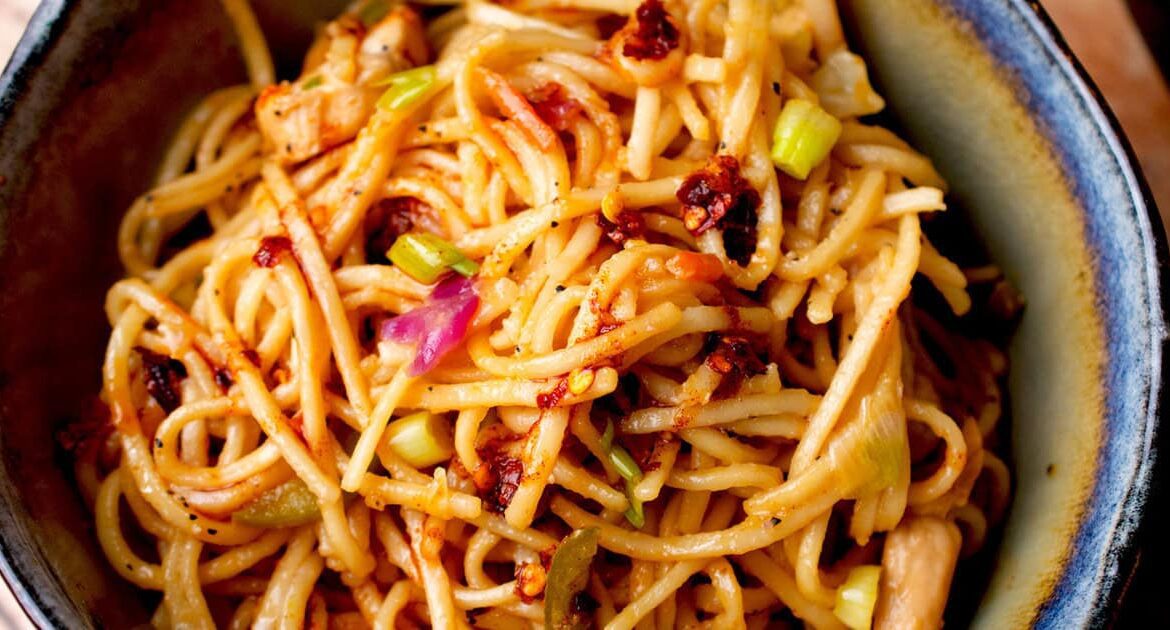
Hakka Noodles (Pakistani Chow Mein)

Hakka noodles (Pakistani chow mein) is a popular Pakistani-Chinese fusion recipe that combines tender noodles, juicy chicken, and crisp vegetables in a savory, slightly spicy sauce. Ready in just 30 minutes in one pot, this is a perfect weeknight meal for a busy day.
Pakistani-Chinese cuisine, often referred to as “desi Chinese,” is a unique culinary adaptation of Hakka cuisine. Dishes are prepared with bold spices, tangy sauces, and local vegetables, resulting in more robust flavors than in traditional Chinese cuisine.
Hakka noodles, or chow mein as they’re commonly known, are a staple at Chinese restaurants across Pakistan. This easy and versatile recipe is not only quick and easy to prepare, but is also easy to tailor to families’ personal and dietary preferences.
Pair these Hakka noodles with chili chicken and chicken corn soup for a complete kid-friendly dinner.
[feast_advanced_jump_to]
Ingredient notes
- Avocado oil: Use a neutral oil with a high smoke point, like canola, avocado, or sunflower, for stir-frying over high heat.
- Sesame oil: I like to add a small amount of sesame oil for that authentic Asian flavor.
- Garlic paste: Homemade garlic paste creates an aromatic base. A store-bought paste can be used for convenience.
- Chicken: I recommend boneless chicken tenderloins cut into small pieces for this recipe.
- Black pepper: This is the only seasoning needed for this recipe, aside from the sauces listed below.
- Coleslaw mix: Thinly sliced cabbage and carrots are a staple in Indo-Chinese cuisine. To save time chopping and cutting, I use a store-bought coleslaw mix for these ingredients.
- Bell peppers: Green bell peppers are traditional, but red and yellow add beautiful color and sweetness, if you prefer those.
- Noodles: I use Asian Lo Mein noodles available at most supermarkets for this recipe. For alternatives, refer to the substitutions section below.
- Soy sauce: The foundation of flavor in this dish. Use regular soy sauce for the best balance, or go with low-sodium if you’re watching your salt intake.
- Vinegar: White vinegar or rice vinegar adds the signature tangy punch that defines Pakistani-Chinese cuisine. This is what sets it apart from other chow mein recipes.
- Sriracha: I like to add a little sriracha to spice up my Hakka noodles.
- Cornstarch: A cornstarch slurry added at the end helps thicken the sauce so it adheres to the noodles better.
- Spring onions: Both the white and green parts are added at the end for flavor and color.
Please see the recipe card at the bottom of this post for the complete list of ingredients, measurements, and recipe instructions.
Substitutions & variations
- Add a different protein: Use rotisserie chicken for easier preparation, or for a change, use beef strips, shrimp, or scrambled eggs instead.
- Make it vegetarian: Add paneer or tofu for protein, and add additional vegetables like snap peas, bean sprouts, bok choy, or baby corn for a hearty vegetarian version of these Hakka noodles.
- Make it gluten-free: Use rice noodles and substitute tamari for soy sauce for a gluten-free variation of this recipe.
- Make it spicier: Throw in some sliced green chilies, add white pepper powder, or serve it with hot & sour soup for a meal with a little kick.
- Use different noodles: Regular spaghetti or egg noodles also work well as substitutes if lo mein is unavailable.
How to make Hakka noodles
- Step 1: Mix the avocado and sesame oil and heat in a wok. Add the garlic paste and saute for 30 seconds.
- Step 2: Add the chicken and black pepper powder, then sauté for 10 minutes to cook the chicken.
- Step 3: Add the bell peppers first, then sauté for 2-3 minutes.
- Step 4: Next, add the coleslaw, and continue to saute just until the vegatbles start to sweat.
- Step 5: Add the noodles along with the soy sauce and vinegar, and saute for 3-5 minutes.
- Step 6: Finish the hakka noodles by adding sriracha and adjusting the salt and pepper to your liking. Add the cornstarch slurry and green onions as instructed in the recipe card below and serve.
Expert Tips
- Use a wok for best results: The shape of a wok is designed for stir fries and makes the entire cooking process more efficient. I highly recommend using one when preparing noodles or garlic rice.
- Don’t overcook the noodles: Boil the noodles until just al dente, as they’ll continue cooking when stir-fried. Overcooked noodles become mushy.
- Use high heat: Stir-frying over high heat creates that signature smoky flavor and keeps vegetables crisp. Don’t overcrowd the wok.
- Prep everything first: Have all your ingredients chopped and sauces mixed before you start cooking. Stir-frying happens quickly.
- Add noodles last: Cook your vegetables first until crisp-tender, then add the noodles to prevent them from getting soggy.
- Toss, don’t stir: Use a tossing motion rather than stirring to prevent the noodles from breaking and to ensure an even coating of sauce.
Recipe FAQS
What makes Pakistani chow mein different?
Pakistani-style chow mein uses more vinegar for tang, has bolder spices, and often includes cabbage and green bell peppers as the primary vegetables. The flavors are more robust and spicier than those of traditional Chinese chow mein.
Can I make this recipe ahead of time?
Hakka noodles are best enjoyed fresh, but you can prepare all the vegetables and sauce ahead of time. Store them separately in the refrigerator and stir-fry when ready to eat. Leftover noodles can be refrigerated for up to 2 days, though they may lose some texture.
How do I store and reheat my leftovers?
Store the noodles in an airtight container in the refrigerator for up to 3 days, or freeze for up to 3 months. Defrost the frozen noodles first, then heat them in the microwave in 30-second increments.
Other recipes you may like
- Chicken Shawarma Bowl
- Chicken Shashlik
- Thai Chicken Salad With Mango
- Khow Suey (Pakistani Curried Noodles)
Did you try this recipe? Leave a ⭐️⭐️⭐️⭐️⭐️ rating below and share it on Instagram, Facebook, and Pinterest!
Hakka Noodles (Pakistani Chow Mein)
Hakka Noodles (Pakistani Chow Mein) is an easy one pot recipe for traditional South Asian chicken and vegetable stir fried noodles.
#wprm-recipe-user-rating-0 .wprm-rating-star.wprm-rating-star-full svg * { fill: #08295e; }#wprm-recipe-user-rating-0 .wprm-rating-star.wprm-rating-star-33 svg * { fill: url(#wprm-recipe-user-rating-0-33); }#wprm-recipe-user-rating-0 .wprm-rating-star.wprm-rating-star-50 svg * { fill: url(#wprm-recipe-user-rating-0-50); }#wprm-recipe-user-rating-0 .wprm-rating-star.wprm-rating-star-66 svg * { fill: url(#wprm-recipe-user-rating-0-66); }linearGradient#wprm-recipe-user-rating-0-33 stop { stop-color: #08295e; }linearGradient#wprm-recipe-user-rating-0-50 stop { stop-color: #08295e; }linearGradient#wprm-recipe-user-rating-0-66 stop { stop-color: #08295e; }No ratings yet
Print Recipe
Print Recipe
Pin Recipe
Prep Time 20 minutes Cook Time 20 minutes Total Time 40 minutes
Course Main CourseCuisine Chinese, Indian, Pakistani
Servings 6 servingsCalories 268 kcal
Ingredients 1x2x3x
- 1 box lo mein noodles (14 oz. each)
- ⅓ cup avacado oil
- 2 tablespoon sesame oil
- 1 teaspoon garlic paste
- 1 lb chicken
- ½ teaspoon black pepper powder
- 1 medium green bell pepper
- 2 cups cole slaw mix
- ½ cup shredded carrots (optional)
- ½ cup soy sauce
- ¼ cup white distilled vinegar
- 2 tablespoon sriracha sauce
- 2 tablespoon cornstarch
- 1 bunch green onions
Instructions
- Boil the noodles as per package instructions, strain, rinse with cold water, toss in 2 tablespoon of the avocado oil, and set aside. (see notes)
- Mix the remaining avocado and sesame oil and heat in a wok.
- Add and sautee the garlic paste for 30 seconds.
- Add the chicken and black pepper powder and stir-fry for 10 minutes.
- Add the bell pepper, cole slaw mix, and the carrots (if using)and saute for 5 minutes. (see notes)
- Add the cooked noodles and toss to mix the chicken and vegetables.
- Add the soy sauce, vinegar, sriracha, and continue to stir fry for another 3-5 minutes.
- Prepare a slurry with the cornstarch and ¼ cup water, and add to the noodles. (see notes)
- Check and adjust the seasoning as needed, add the green onions, toss and serve with some chili crisp oil.
Notes
Using carrots: Traditional Pakistani chow mein is prepared with green bell pepper, cabbage, and julienned carrots. I use a coleslaw mix to minimize chopping and cutting, but it has very few carrots. Use julienned or store-bought shredded carrots to add a pop of color and flavor to this recipe.
Cooking the noodles: I recommend boiling the noodles 2-3 minutes less than the package instructions suggest, to prevent them from becoming mushy when stir-fried. Immediately strain, rinse with cold water, toss with a bit of oil, and spread on a flat tray to prevent them from clumping.
Prepping the vegetables: Everything needs to be thinly sliced or julienned for this recipe. For the bell pepper, remove the core and cut it into thin strips. Repeat this process with the cabbage and carrots if you’re chopping them yourself.
Cornstarch slurry: This helps liquid sauces coat the noodles, enhancing the dish’s flavor.
Nutrition
Serving: 1servingCalories: 268kcalCarbohydrates: 8gProtein: 10gFat: 22gSaturated Fat: 4gPolyunsaturated Fat: 5gMonounsaturated Fat: 13gTrans Fat: 0.03gCholesterol: 27mgSodium: 1234mgPotassium: 241mgFiber: 2gSugar: 2gVitamin A: 1977IUVitamin C: 30mgCalcium: 29mgIron: 1mg
Keyword hakka noodles desi chow mein, hakka noodles with chicken, stir fry noodles
Tried this recipe?Let us know how it was!
The post Hakka Noodles (Pakistani Chow Mein) appeared first on Untold Recipes By Nosheen.


0 Comments