
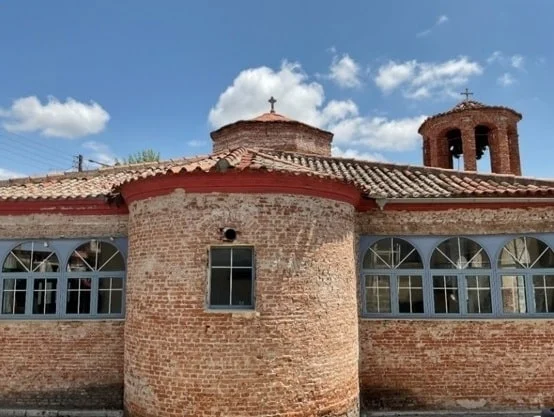
Greece Restores Emblematic Byzantine Church in City of Drama

The church is a major landmark in Drama’s historic center. Credit: Greek Ministry of Culture
Greece is moving forward with the completion of the restoration and promotion project for the Church of Agia Sophia in the northeastern city of Drama. The landmark is the city’s most significant Byzantine monument.
Following initial excavation work, which uncovered an older Early Christian basilica phase beneath the current structure, the new phase of work will focus on targeted structural and morphological interventions. The primary goal is to highlight the historical, religious, and aesthetic value of the monument, which is a major landmark in Drama’s historic center.
Greece’s Minister of Culture, Lina Mendoni, emphasized that the restoration of Agia Sophia is not just a technical project but “an act of respect for the local cultural heritage,” calling the church a “living testimony to the city’s long history and spiritual radiance.” She explained that while the first phase uncovered the monument’s Early Christian origins, the new project aims at structural and morphological restoration to preserve and display its form as it existed up until the 19th century.
This will safeguard and enhance the monument’s distinct historical, architectural, and spiritual value, ultimately returning the fully restored church to Christian worship.
The interior of the Church. Credit: Greek Ministry of Culture
Historical overview of the Byzantine church in Drama
The Church of Agia Sophia, dating to the 10th century, is the most important of a complex of religious and fortification monuments in Drama and confirms the city’s significance over time. It is believed to have been the katholikon (main church) of a Byzantine monastery and is a characteristic example of dome-building architecture from the Middle Byzantine period. The church currently functions and is planned to continue functioning as a parish church.
The Church’s present form is the result of five major building periods:
- First Period (4th–5th century): This is the foundation of the three-aisled Early Christian basilica.
- Second Period (9th–10th century): The construction of the domed Byzantine church took place, forming the core of the current structure, on the basilica’s foundations.
- Third Period (10th–19th century): The addition of the south chapel (likely a burial site) and various modifications, confirms continuous use.
- Fourth Period (1829–1913): The church was converted into a mosque, resulting in extensive alterations and destruction of original architectural elements.
- Fifth Period (1913–Present): After the restoration of its Christian function, extensive conservation and renovation works were carried out, bringing the monument to its current state.
Condition and scope of work
While the monument’s general state of preservation is satisfactory due to ongoing maintenance, issues related to material aging, weathering, and previous alterations persist.
The Byzantine core shows cracks in the piers and minor subsidence. Deterioration mainly involves bricks and mortar, which have weathered due to humidity and prolonged exposure to the elements.
Related: Greece Restores Three Early Christian Monuments on Astypalaia


0 Comments