
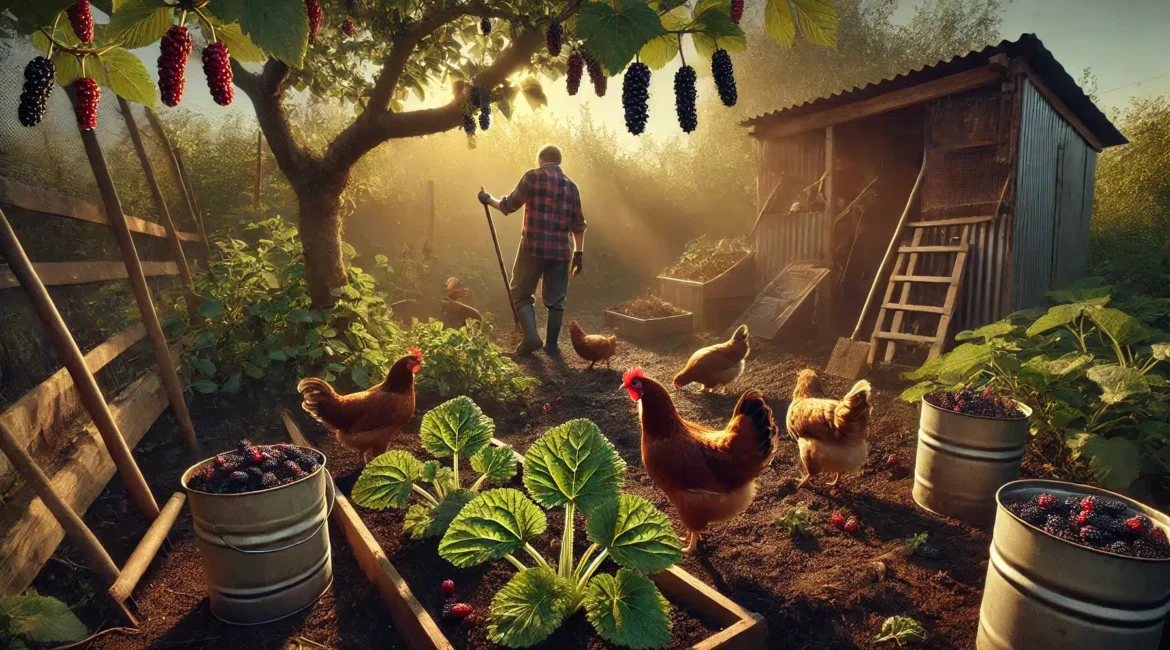
From Feed Bills to Free Eggs: The Backyard System That Pays You Back

]]>
The Homestead Secret Hidden In Your Hedgerows And Fence Lines
Backyard chickens were never meant to run on a monthly feed subscription. Yet that’s exactly how many flocks live today. Month after month, homesteaders haul home another sack of grain, watch their hens grow plumper but not necessarily healthier, and quietly admit the egg money doesn’t quite cover the feed bill.
Meanwhile, out along old fence lines and hedgerows, a different story is growing. Deep-rooted perennials, humble insects, and kitchen scraps can turn sunlight into rich, nutrient-dense eggs no supermarket carton can match. In other words, the more your land feeds your birds, the less the feed store does.
When the Ledger Says You’re Losing
Your hens are paying their way—your feed bill says otherwise. Break up with the bag and let your ledger prove your flock can actually profit.
Sit down at the kitchen table and run the numbers. Six backyard hens, each laying around two dozen eggs a month, give or take, might produce about 150 eggs. That’s roughly five dozen. At five dollars a dozen in many small towns—sometimes more these days—you’re looking at about twenty-five bucks in egg value.
Then comes the feed run. A 50-pound bag of layer pellets now rings up near twenty-five dollars in many places. Stretch that bag across seven careful weeks for six hens, and you’re still dropping at least fifteen dollars a month just on the main ration. Add oyster shell, grit, bedding, and the gas to drive into town, and suddenly you’re pouring in more than you’re getting back.
So month after month, the receipts pile up. What started as a self-sufficient dream begins to feel like just another bill. And truth be told, the system is built that way. The more you depend on feed bags, the less you’re a producer and the more you’re simply a customer.
Chickens Aren’t Grain Mills
Step away from the receipts and look at the bird herself. A hen isn’t a tiny cow. She’s a scratch-and-peck omnivore—closer to a small dinosaur than a grain silo.
Her crop is only a holding pouch. From there, food moves into the proventriculus, where enzymes begin breaking down proteins, and then into the gizzard, where grit and muscle grind everything into usable form. But even that hardworking system has limits. Too much indigestible fiber and nutrients slide through unused. Too much cheap starch and the balance goes sideways.
What a laying hen really needs is quality protein, moderate energy, and a steady stream of minerals. Most productive birds require roughly 16–20 percent protein for strong shells, steady laying, and healthy feathers. Yet typical corn-and-soy rations often overshoot calories while falling short on key amino acids and living nutrients.
Walk through a yard fed entirely from bags and you’ll often see the results: hens soft around the middle, shells that chip too easily, and birds that lack the bright, alert spark they should carry. They’re not starving. They’re simply mismatched to the fuel they’re given.
Built to Scavenge, Not Just Swallow Pellets
Let a flock loose in an orchard corner or fallow patch and they’ll show you what they were designed to do. They scratch through leaf litter, flip old sticks, and chase anything that wriggles. Insects, weed seeds, tender greens, and kitchen scraps form their natural buffet.
For most of history, that’s how chickens lived. They cleaned up after gardens, patrolled orchards, and converted waste into eggs. Grain existed, but as a supplement—not the centerpiece. Only in the last century did corn-and-soy rations become the main course, pushed by policy, profit, and industrial efficiency.
That shift changed the egg. Modern store eggs often carry an omega-6 to omega-3 ratio around 20:1—an inflammatory balance many nutrition experts warn about. Meanwhile, eggs from hens eating green forage and natural proteins can swing much closer to 1:1 or 4:1, similar to wild foods and true pastured meats. The bird didn’t change. The feed did.
The Tree That Feeds Like Soy
Now imagine a row of shrubs along your fence that never need replanting, ask little water once established, and quietly produce protein year after year. That’s what tagasaste—also called tree lucerne—can do for a chicken yard.
This hardy perennial pushes deep roots into poor soil and partners with nitrogen-fixing bacteria, improving the ground as it grows. Its leaves test around 18–24 percent crude protein on a dry basis, rivaling many commercial feeds. Once established, a mature plant can produce armloads of edible foliage each season.
When the shrub reaches about six feet tall, simply cut it back to a couple of feet. New shoots burst out within weeks, hung with tender, protein-rich leaves. Repeat that cycle a few times each year and you’ve got decades of living chicken feed without a tractor or fertilizer spreader.
Better still, you can dry those leaves into “tree hay.” Properly dried, they hold most of their protein and minerals. Come winter, tossing a bundle into the coop turns a bleak month into a green feast.
Comfrey: The Living Mineral Scoop
Protein alone won’t build a strong egg. Shells and bones run on minerals. That’s where comfrey—especially the Bocking 14 variety—earns its place.
Picture broad, deep-green leaves rising beside the coop, again and again from the same crown. Beneath the surface, roots dive deep into the soil, mining calcium, potassium, magnesium, and trace minerals your annual plants never reach. Those nutrients end up stored in the leaves.
Cut comfrey five or six times a season and let the leaves wilt for a day before feeding. The fibers soften, and hens strip them eagerly. Each armload replaces a bit more of the store-bought supplements most feed programs rely on. Because Bocking 14 doesn’t spread by seed, it stays right where you plant it.
Bugs: Nature’s Missing Ingredient
Even with rich forage and mineral plants, one piece remains: methionine. This amino acid is crucial for feathers, eggs, and immune strength, yet most plants fall short. Commercial feeds often add synthetic versions.
On a homestead, insects can fill the gap. Black soldier fly larvae are especially powerful. They turn kitchen scraps and farm waste into dense, wriggling protein loaded with essential amino acids.
Set up a simple bucket system with drain holes and kitchen scraps. The flies find it on their own. Soon the larvae are converting waste into feed. As they mature, they crawl out naturally—dropping straight into the chicken yard if you design it right. Each one is a compact packet of protein and healthy fat.
Shade, Sugar, and Summer Eggs
Summer brings heat, and heat slows laying. That’s where mulberry trees come in.
A spreading mulberry over the run can drop ground temperatures noticeably, easing stress on the flock. Then, when fruiting begins, ripe berries fall straight into the yard. Chickens rush to gobble them, turning tree-grown sugars into the energy needed to keep laying through hot weather.
When autumn arrives and leaves fall, stored tree hay and perennial greens carry the flock forward again. Season flows into season with less dependence on the feed aisle.
From Fake Yolks to Real Nutrition
Crack a store egg beside a true homestead egg and you may notice similar color. Modern feed often includes natural pigments to deepen yolks. But color alone doesn’t equal nutrition.
Eggs from birds eating real forage and insects often contain far better fatty acid balance and dramatically higher levels of nutrients like vitamin K2. Lab comparisons consistently show the difference. What looks similar in the pan can behave very differently in the body.
So when breakfast comes from hens that spent yesterday under mulberry shade, pecking comfrey and chasing larvae, you’re eating something entirely different. Not just prettier eggs—better ones.
Planting Your Way Out of the Feed Aisle
In the end, escaping the feed-store treadmill isn’t about finding cheaper pellets. It’s about rebuilding a system where trees, shrubs, deep-rooted herbs, and insects carry most of the load.
A row of tagasaste along a fence. A patch of comfrey near the coop. A mulberry shading the run. A simple larvae bucket by the shed. Over a few seasons, those pieces can shift your flock from bag-dependent to largely home-fed.
As food prices climb and quality drops, the answer isn’t hiding in another glossy catalog. It’s growing in the soil. Plant it, tend it, and let your birds do what they were made to do. One small tree, one patch of comfrey, one bucket of bugs at a time, you can trade receipts for roots—and start feeding your flock the way nature intended.


0 Comments