
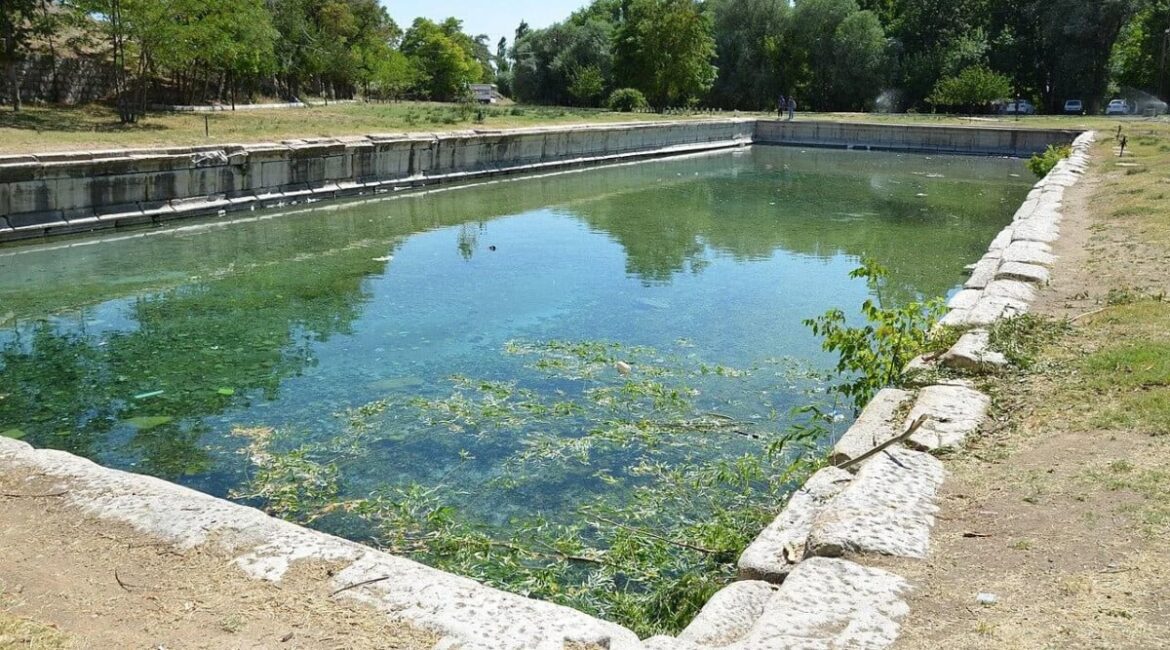
Ancient Roman Pool in Turkey Dedicated to Greek God Asclepius

Archaeologists in Turkey have discovered an ancient Roman pool in the city of Tyana which functioned as a healing sanctuary dedicated to Asclepius, the Greek god of medicine. The conclusion was reached during renewed excavations conducted by researchers from Aksaray University as part of the Ministry of Culture and Tourism’s Heritage for the Future project.
Archaeologists from Aksaray University, working under the Ministry of Culture and Tourism’s Heritage for the Future project, have re-examined the so-called “Roman Pool” in Bahçeli in Niğde Province. Long believed to be part of Tyana’s water distribution system, the structure has now been identified as a sacred center for healing rituals, purification, and therapeutic practices tied to Asclepian tradition.
The pool, built in the 2nd century CE during the reigns of Roman emperors Trajan and Hadrian, was once considered a purely utilitarian hydraulic installation. But the 2025 excavation season uncovered compelling evidence of ritual use. Key among the finds was a marble altar carved with snake motifs, powerful symbols associated with Asclepius and ancient concepts of rejuvenation and health.
Additional sculptural fragments featuring serpent imagery were discovered nearby, reinforcing the interpretation that the site functioned as a sanctuary where sacred water, devotion, and medical ritual intersected. Archaeological remains on the eastern side of the pool indicate that it once formed part of a larger temple or sanctuary complex.
Such healing centers dedicated to Asclepius were widespread in the Greek and later Roman world, blending worship with early medical care. Pilgrims often sought cures through ritual bathing, prayer, incubation, and offerings of votive objects in gratitude for restored health.
Further strengthening the new interpretation, researchers uncovered a well-preserved inscription referencing emperors Marcus Aurelius and Commodus. The text suggests that major construction took place between CE 177 and 180, providing a refined timeline and confirming imperial involvement in supporting public and spiritual health initiatives throughout ancient Anatolia.
(Source: Archeology Magazine)
Tags:
Anatolia, ancient history, archaeology, Asclepius, excavation, Greece, Greek gods, healing sanctuary, heritage, Roman Empire, Turkey, Tyana


0 Comments