
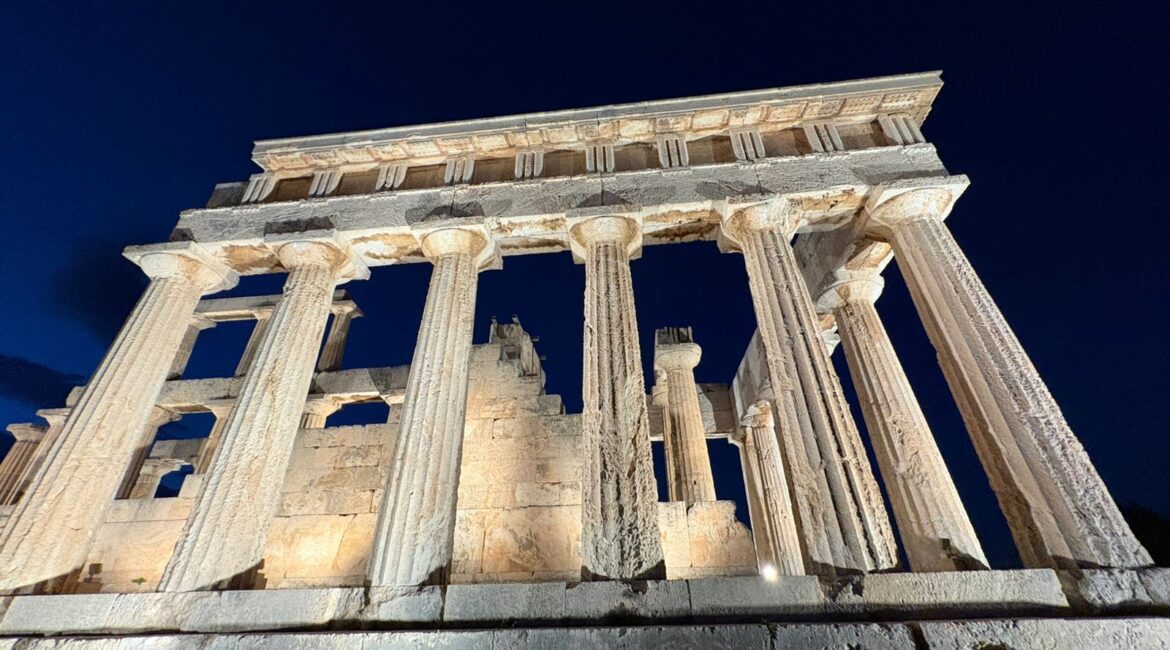
Ancient Greek Temple of Aphaea on Aegina Shines Again with Stunning New Illumination

Aegina’s Temple of Aphaea Shines Anew with Timeless Grace. Credit: Greek Ministry of Culture
On a clear evening on the Greek island of Aegina, the ancient Temple of Aphaea was bathed in light once again. Perched high on a pine-covered hill overlooking the Saronic Gulf, the 2,500-year-old temple seemed to awaken, its Doric columns gleaming softly against the night sky. The moment marked more than a technical achievement, it was a symbolic reunion of Greece’s past and present.
The new lighting, designed by Eleftheria Deko, the acclaimed artist behind the illumination of the Acropolis, was unveiled in the presence of Greek Minister of Culture Lina Mendoni. Using advanced LED technology, the installation highlights every architectural rhythm of the monument while conserving energy and allowing different lighting moods. For Aegina, it was a night of pride, a fusion of heritage, artistry, and renewal.
The timeless sanctuary of Aphaea
The Temple of Aphaea has watched over Aegina for more than two millennia. Dedicated to Aphaea, a local goddess of fertility and agriculture, it is the only known sanctuary to honor her. The temple sits about 160 meters (524 feet) above sea level on the island’s eastern side, only 27 kilometers (16 miles) from Athens, yet it feels worlds apart — serene, timeless, and deeply rooted in myth.
Archaeologists believe the site was first used for worship during the Mycenaean period, long before the temple we see today was built around 500 BC. Beneath its foundations lie the remains of an earlier shrine, possibly destroyed by fire. When the Athenians later took control of Aegina, the sanctuary’s importance waned, but its presence never faded.
Greek Minister of Culture Lina Mendoni outside of the Temple of Aphaea. Credit: Greek Ministry of Culture
Art, history, and inspiration
The temple’s Doric design, with its perfect proportions and sense of balance, is a masterpiece of classical architecture, even older than the Parthenon.
Its pedimental sculptures, once painted in vivid colors, depict scenes from the Trojan War, celebrating Aegina’s ancient heroes.
The site’s harmony and grace have captivated travelers for centuries: the British painter J.M.W. Turner sketched it repeatedly, and the ancient writer Pausanias recorded its splendor in his travels.
Lighting the Way Forward at Aegina’s Temple of Aphaea
For the people of Aegina, the temple’s new illumination is more than aesthetic, it’s a promise of revival.
Now visible from across the island, the glowing columns of the Temple of Aphaea stand as a beacon, a reminder that Greece’s light, both literal and symbolic, continues to shine through the centuries.


0 Comments