
Ancient DNA Reveals Remarkable Genetic Continuity in Greeks Despite Centuries of Foreign Rule

A series of groundbreaking genetic studies, highlighted in recent analyses, confirm that modern Greeks retain strong DNA continuity with their Bronze Age ancestors — the Minoans and Mycenaeans — despite Roman, Byzantine, and Ottoman occupations.
Experts attribute this stability to geographic isolation, endogamy, cultural assimilation, and limited large-scale migrations.
Led by researchers like Dr. Iosif Lazaridis, a landmark 2017 study found that modern Greeks share 70–80% ancestry with Mycenaeans, rooted in Neolithic Anatolian farmers (62–86%) and smaller contributions from the Caucasus/Iran and the Eurasian steppe. High endogamy in prehistoric Aegean communities further restricted external gene flow.
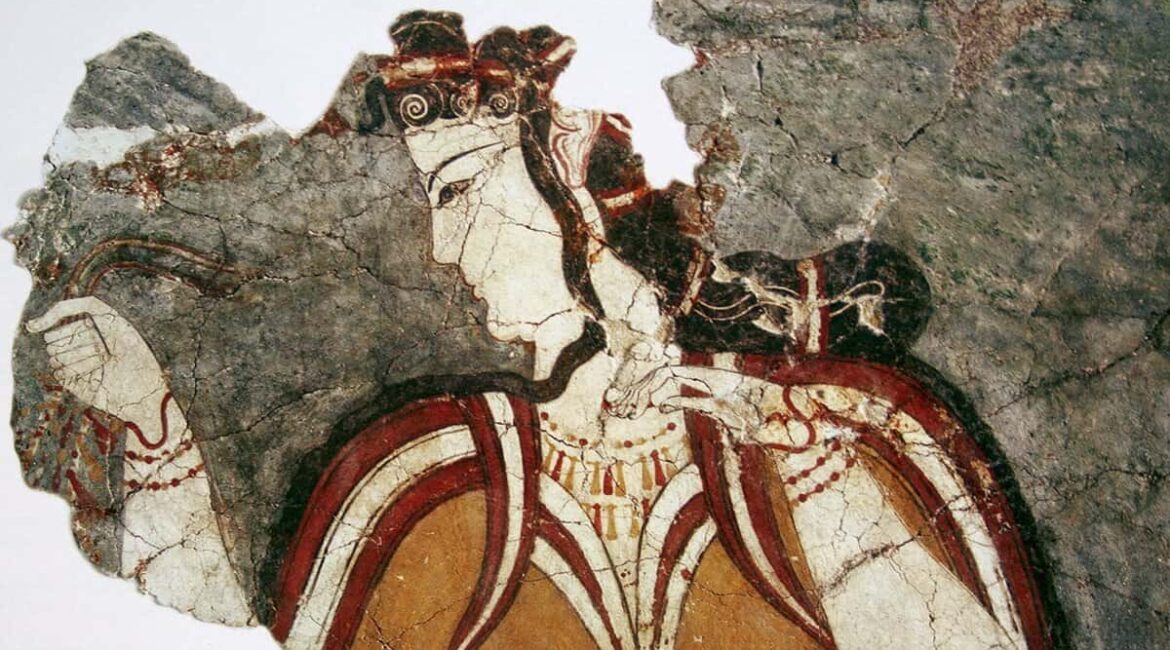
Traditional Greek art history, ancient murals, Greek culture and archaeology, classical heritage.
Roman rule (146 BCE–330 CE) introduced minimal Italic DNA, with influences mainly from eastern Anatolian or Levantine sources tied to urban migration rather than mass Italian settlement.
Byzantine policies preserved Greek identity through Hellenization and resettlement, assimilating limited northern European or Slavic elements while maintaining core local ancestries.
The Ottoman era (1453–1821 CE) left only a light genetic footprint (6–12% West Anatolian ancestry in some regions), due to religious segregation and low intermarriage.
Rare Heart-Protective Mutation Discovered in Crete
Adding to Greece’s genetic uniqueness, isolated mountainous villages in Crete — such as Anogia and Mylopotamos — exhibit elevated frequencies (1.9–4%) of the rare APOC3 R19X mutation, linked to lower triglyceride levels and higher “good” HDL cholesterol, offering natural protection against cardiovascular disease. This variant is extremely scarce (
These findings, drawn from studies in Nature, Science, and other journals, underscore Greece’s enduring genetic heritage and the value of isolated populations for medical research.
/Professor Yilmaz: Pontian Greeks were Turkified, my DNA shows nothing from Central Asia
Tags:
ancient DNA Greece, Bronze Age Greece DNA, Byzantine Greek identity, cardiovascular protection Crete, Crete APOC3 mutation, endogamy ancient Greece, Greek genetic continuity, greek genetics, Greek heritage DNA, Hellenic genetic history, Iosif Lazaridis study, Minoan Mycenaean ancestry, Ottoman genetic influence Greece, R19X variant Crete, Roman occupation Greece genetics


0 Comments