
Ancient Greek Theater of Herakleia Discovered in Policoro, Italy Greek City Times

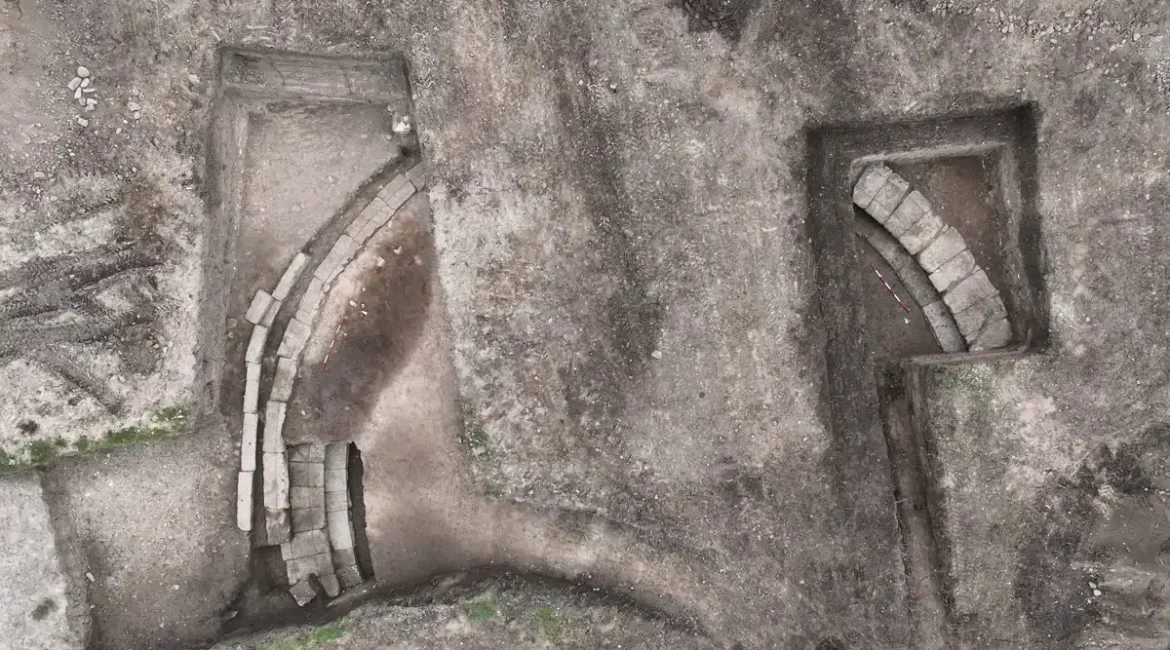
Archaeologists have identified the remains of the ancient theater of Herakleia, an important Greek city of Magna Graecia, during new archaeological investigations in Policoro.
The discovery fills a long-standing gap in the archaeological understanding of the ancient polis, one of the most influential Greek settlements in southern Italy.
The findings will be officially presented on March 19, 2026, at the Dinu Adamesteanu National Archaeological Museum during a conference organized by the Italian Ministry of Culture and the National Museums of Matera – Regional Directorate of National Museums Basilicata.
A Key Monument of the Ancient Greek Polis
The city of Herakleia was founded by the Greek colony of Tarentum in 433 BC along the Ionian coast of Lucania.
Within a few decades, it became one of the most prosperous and culturally influential centers of Magna Graecia.
Although excavations over the years had revealed residential quarters, sanctuaries, roads, and public buildings, archaeologists had never previously located the city’s theater — one of the most important civic structures in Greek urban life.
Filling a Major Archaeological Gap
The newly identified structure finally confirms the location of the public theater, a key building where ancient Greek communities gathered for:
- theatrical performances
- cultural events
- civic gatherings and festivals
The absence of such a structure had long puzzled researchers studying Herakleia’s urban plan.
Archaeological surveys conducted in 2025 ultimately enabled scholars to pinpoint the theater’s area, offering new insights into the ancient city’s urban layout and cultural life.
Understanding Life in Magna Graecia
The discovery provides valuable clues about the social and cultural dynamics of Herakleia, helping archaeologists reconstruct the public spaces where residents participated in artistic and civic activities.
Experts say identifying the theater allows researchers to better understand how the city functioned as a major cultural center within the Greek world of southern Italy.
Archaeological Research Continues
The excavation was directed by Carmelo Colelli, scientific director of the project and director of the National Museum of the Siritide and the Archaeological Park of Herakleia.
The research was funded by Italy’s Ministry of Culture through a national archaeological excavation program that supports research at major historical sites, including Pompeii and other national parks.
Researchers believe the discovery will significantly enhance understanding of Herakleia’s urban structure and its role in the broader network of Greek cities across Magna Graecia.
Magna Graecia: Casapulla, the town of Apollo
Bill Giannopoulos
Junior Editor
Bill Gee is a journalist covering geopolitics, defence and Hellenic diaspora news.


0 Comments