
Ancient Greek Woman Led Major Olive Oil Industry in Pamphylia. Greek City Times

The ancient settlement of Lyrboton Kome, located near modern-day Antalya in southern Turkey, has been identified as one of the most significant olive oil production centres in the ancient Mediterranean world, dating back more than 2,200 years.
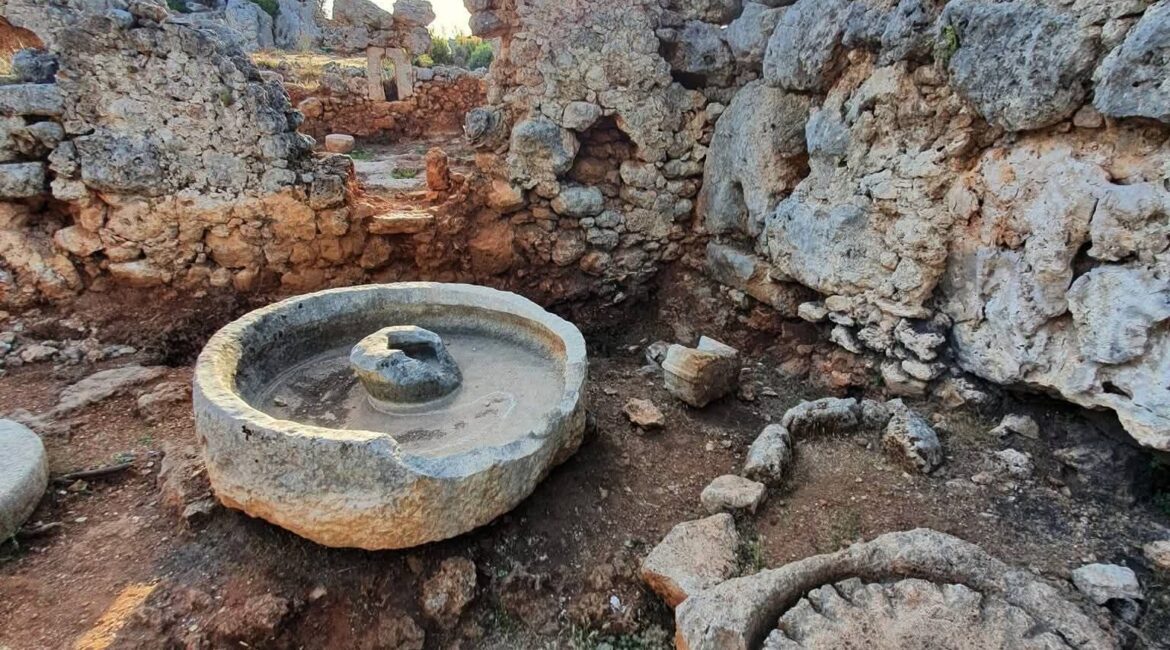
Archaeological excavations at the site have uncovered evidence of industrial-scale olive oil production, including more than 80 olive oil workshops (ateliers) and large cisterns used for storage and processing. Researchers say the settlement flourished during the Hellenistic and Roman periods, with production continuing well into the Byzantine era.
Lyrboton Kome formed part of the wider Greek cultural landscape of Pamphylia, a region of southern Asia Minor that was heavily Hellenised following the campaigns of Alexander the Great in the 4th century BC. The settlement itself bears a Greek name, with “kome” meaning village in Ancient Greek.
One of the most remarkable aspects of the site is that it was founded and administered by a woman named Arete, according to inscriptions discovered by archaeologists. Arete is believed to have organised and institutionalised olive oil production at the settlement, transforming it into a major economic centre.
Inscriptions also reveal that she financed the construction of a tower, dedicating it to Domitian and to **Artemis of Perge. Historical evidence suggests that her family retained control of the enterprise for generations, pointing to a rare example of female-led economic leadership in the ancient world.
Olive oil produced at Lyrboton Kome was transported to the nearby city of Perge, one of the most important urban and religious centres of ancient Pamphylia. From there, the oil likely travelled along the Via Sebaste, a major Roman road network linking inland production sites with coastal trade hubs.
The oil was stored in amphorae, the standard transport vessels of the ancient Mediterranean, before being transported by cart to Perge and then shipped from nearby ports across the Mediterranean Sea.
Through these trade routes, olive oil from Lyrboton Kome became part of the vast commercial networks of the Roman world, supplying markets across the eastern Mediterranean.
Archaeologists say the site provides valuable insight into the economic organisation, trade networks and agricultural production of the ancient Greek and Roman worlds.
Tags:
Ancient Economy, ancient Greece, ancient Greek olive oil production, ancient trade, ancient trade networks, Antalya, archaeology, Asia Minor, Byzantine era, Greek news, greek news today, Greek Settlements, Greek settlements Asia Minor, Hellenistic period, Lyrboton Kome, Mediterranean History, olive oil history Mediterranean, olive oil production, Pamphylia, Pamphylia archaeology, Perge, Perge ancient city, Roman Empire


0 Comments