
The Restoration of the “Kokovikos House”: A New Cultural Landmark in Athens

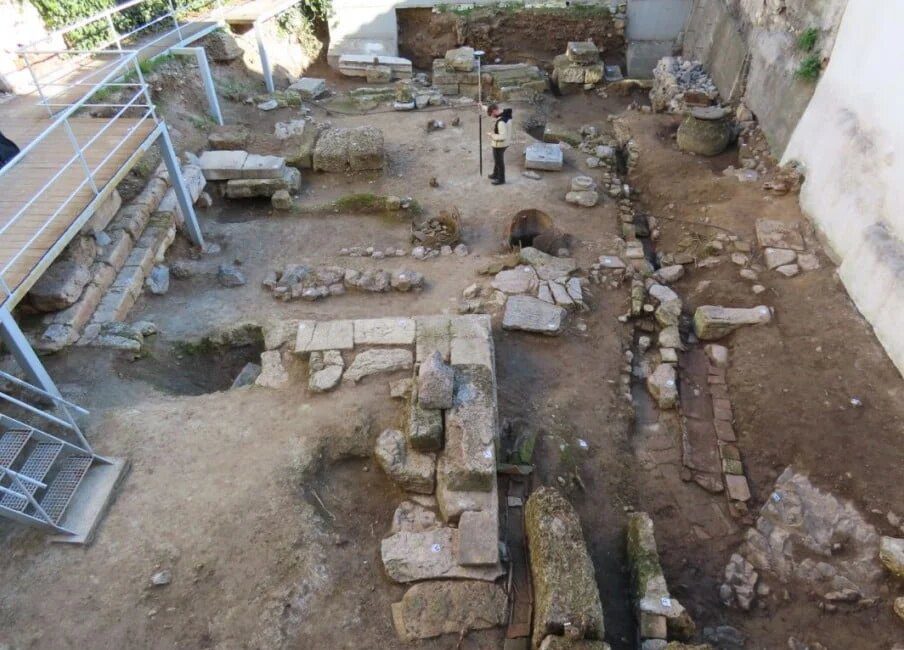
Archaeological dig at Kokovikos House. Ministry of Culture
The Greek Ministry of Culture is proceeding with the restoration of the historic building at 32 Tripodon Street in Athens’ Plaka—famously known as the “Kokovikos House” from the classic Greek film “And the Wife Shall Revere Her Husband.”
The project aims to transform this landmark into a cultural venue dedicated to Greek Cinema, while simultaneously protecting and showcasing the significant antiquities discovered on the premises.
According to the Minister of Culture, Lina Mendoni, the restoration of one of the few remaining “Athenian houses” is vital for reintegrating the monument into the modern life of the city.
“The project restores the building’s historical image and ensures universal accessibility, while the archaeological findings—dating from the Classical to the Byzantine eras—provide a unique educational and cultural value,” she stated.
The Kokovikos House in the 1950s. Public Domain
Archaeological discoveries at the “Kokovikos House”
From the 1965 Greek Movie Credit Greek Ministry of Culture
Excavations conducted between 2000 and 2003 revealed that the site has been in continuous use for millennia. Key findings include:
- The Ancient Tripodon Street: Discovered along the eastern side of the plot, featuring layers dating from the 4th century BC to the modern era.
- Choregic Monuments: Two square bases (krepides) were found, likely belonging to ancient Choregic monuments, alongside a stepped ascent of at least four stages. In ancient Greece, Choregic Monuments were commemorative structures built by wealthy citizens called choregoi (sponsors) to celebrate a victory in a theatrical or musical competition.
- Ancient Hydraulics: A stone conduit and overlapping clay pipes were uncovered, including a section of the famous “Peisistratid or Kimonean” aqueduct.
- The 4th Century BC Cistern: A well-cistern was found filled with a large deposit of pottery—mostly banquet vessels (symposium ware) from the late 4th century BC.
- Historical Layers: Remains of a Hellenistic retaining wall and an Early Christian building were identified within the structure’s footprint.
The restoration project
Ancient finds at the Kokovikos House. Credit: Ministry of Culture
The project, approved by the Central Archaeological Council (KAS), focuses on structural integrity, authenticity, and visitor experience.
1. Protection & Conservation
Climate Protection: A drainage system and elevated flooring will be installed to protect the ruins from environmental factors, particularly water and moisture.
Structural Consolidation: Stabilization of the ancient architectural remains using materials that are clearly distinguishable from the original ancient fabric.
2. Architectural Reconstruction
The project involves the restoration of the main building—a three-story folk residence with a basement—and its courtyard.
The “Athenian courtyard” typology will be reconstructed to reflect the building’s historical form, harmonizing with the visual identity of Tripodon Street.
3. Accessibility & Tourism
Universal Access: A new independent entrance on Tripodon Street will feature a metal staircase and an enlarged landing to facilitate access for persons with disabilities (PwD).
Modern Amenities: The site will be enhanced with informative signage and professional night lighting to highlight the monumental character of the ruins.
This initiative serves a dual purpose: it preserves a rare specimen of Athenian architecture and creates a modern cultural hub. By highlighting the ancient street of the “Tripods” alongside the history of Greek cinema, the Ministry of Culture is bridging the gap between Athens’ ancient past and its modern artistic heritage.


0 Comments