
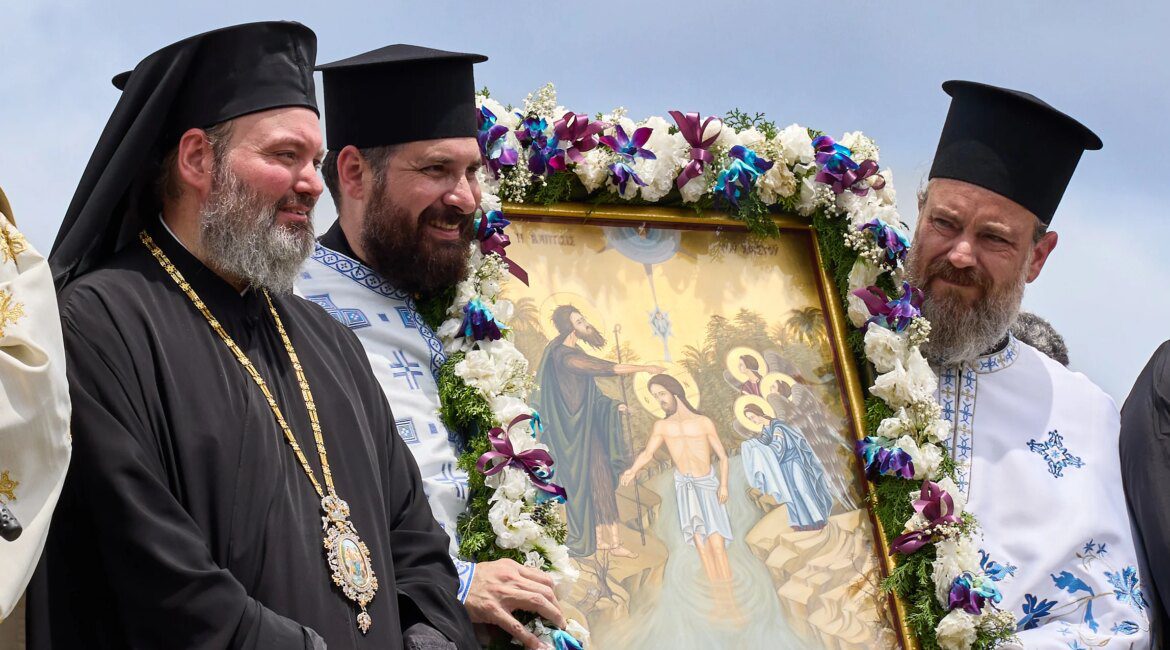
From Sacred Rites to Raucous Revelry

January in Greece is a month of vibrant traditions, bridging the festive Christmas season with the promise of a new year. Ancient customs intertwine with Orthodox Christian faith, creating a unique tapestry of celebrations. From solemn religious ceremonies to boisterous festivals, January offers a captivating glimpse into Greece’s rich cultural heritage.
Epiphany: A Celebration of Light and Water (January 6)
Epiphany, or Theophany (“Ta Fota” – the Lights), marks the culmination of the Twelve Days of Christmas and celebrates the baptism of Jesus Christ. This sacred feast commemorates the revelation of the Holy Trinity – God the Father’s voice from heaven, the Holy Spirit descending as a dove, and Jesus, the Son. It also honors the visit of the Three Kings and the sanctity of the River Jordan.
The day begins with children singing “kalanta” (carols) recounting Jesus’ baptism. Priests perform the Lesser Sanctification of Water (“Mikros Agiasmos”) in churches and homes. The main event, the Great Sanctification of Water, culminates in the “Blessing of the Waters” ceremony. A priest casts a cross into a body of water, and men (and increasingly, women) dive in to retrieve it, believing the retriever will receive blessings and good fortune. While Piraeus hosts a prominent national celebration, countless local ceremonies across the country showcase the unique charm of this tradition.
@greekcitytimes
Today, on the feast of Theophany (January 6), Greece celebrates the baptism of Jesus Christ in the Jordan River—the great revelation of the Holy Trinity. Homes and churches are filled with the joy of the Great Blessing of the Waters, as priests sanctify the waters and, in coastal towns and islands, cast the Holy Cross into the sea for brave swimmers to retrieve. One of the most beloved traditional kalanta (carols) sung by children echoes through the neighborhoods: **Σήμερα τα Φώτα κι ο φωτισμός,** **η χαρά μεγάλη κι ο αγιασμός.** **Κάτω στον Ιορδάνη τον ποταμό** **κάθετ’ η κυρά μας, η Παναγιά.** ✨ This sacred day, known as “Ta Phota” (The Lights), brings illumination, blessing, and renewal to all. Visiting the actual baptism site—Bethany Beyond the Jordan (Al-Maghtas), a UNESCO World Heritage site on the eastern bank of the river in modern-day Jordan—is one of the most profoundly moving spiritual experiences imaginable. The gentle flow of the Jordan, the ancient ruins, and the sense of standing where heaven touched earth make the Gospel story vividly alive. 📍 Bethany Beyond the Jordan (Al-Maghtas), Jordan Χρόνια Πολλά και Καλά Φώτα! May the light of Theophany shine brightly in every heart. ✨
♬ original sound – Greek City Times
The “Arapides” of Drama: Ancient Echoes in Modern Festivities (January 6-8)
In the Drama region of Northern Greece, Epiphany takes on a distinctly Dionysian flavor with the “Arapides” festivities. Young men, clad in animal hides, bells, and tall, fleece masks with blackened faces, symbolize a connection to ancient rituals meant to banish evil spirits and ensure prosperity. Raucous music from lyres, bagpipes, and tambourines, along with dancing and plentiful alcohol, create an electric atmosphere. These traditions, rooted in pre-Christian rites of resurrection, fertility, and renewal, are particularly vibrant in the village of Monastiraki. Despite past suppression, the “Arapides” now thrives as part of Greece’s National Index of Intangible Cultural Heritage.
The “Arapides” wear black capes, pointed goat masks, bells on their waists and wooden swords in their hands/Photo: Educational Cultural Association of Monastiraki.
Ragoutsaria in Kastoria: A Carnival of Music and Merriment (January 6-8)
Kastoria, in Macedonia, erupts in celebration with “Ragoutsaria,” a three-day carnival echoing ancient winter Dionysian festivals. “Bouloukia” (groups) parade through the streets accompanied by brass bands, creating a constant stream of music. While modern costumes are common, traditional animal hides and horned masks link the festival to its roots. The name “Ragoutsaria,” derived from the Latin “rogatores” (beggars), reflects the historical practice of warding off evil spirits in exchange for treats. The festivities culminate on January 8 with a grand parade through Kastoria’s historic neighborhoods, ending in Doltso Square.
Patras Carnival: A Prelude to Lent (January 17-March 2)
Greece’s largest and most renowned carnival, the Patras Carnival, begins its weeks-long celebration in mid-January. Blending traditional Greek customs with contemporary carnival spirit, this vibrant event features elaborate floats, costumes, and satirical performances often targeting political and social themes.
From the Children’s Parade to the Grand Parade, the carnival offers a spectacle for all ages. As a centerpiece of the “Apokries” season, the Patras Carnival marks a final period of indulgence before the onset of Lent and Clean Monday. Visitors are encouraged to enjoy the joyful atmosphere of music, dance, and endless parties that fill the streets of Patras. For more information, visit the official Patras Carnival website.
Read more about Greek wedding customs and traditions
Tags:
Agios Vasilis, Blessing of the Waters, cross diving ritual, Epiphany cross retrieval, Fota festival, Greece January traditions, Greek cultural events January, Greek Epiphany celebrations, Greek Orthodox traditions, Greek winter festivals, Kalanda carols, kallikantzaroi folklore, New Year Greece, Orthodox Christmas Greece, pomegranate smashing tradition, raucous revelry Greece, sacred rites Greece, Saint Basil cake, Theophania Greece, Vasilopita custom


0 Comments