
Greece Adds Three New Traditions to National Intangible Heritage

The Greek Ministry of Culture has announced the inclusion of three new elements in the National Inventory of Intangible Cultural Heritage, in accordance with UNESCO’s 2003 Convention for the Safeguarding of Intangible Cultural Heritage.
The Directorate of Modern Cultural Heritage oversaw the documentation and preparation of the entries, which were approved by the Intangible Cultural Heritage Council with active participation from the communities and cultural groups that preserve these living traditions.
Minister of Culture Lina Mendoni stated: “The addition of these three new elements to the National Inventory highlights the richness and diversity of cultural creation across Greece. These practices strengthen collective memory, ensure historical continuity, and connect the past with the present while shaping the future. Intangible cultural heritage is living, experiential, and reflects the way communities participate and share in daily life. The inclusion of these elements underscores our ministry’s ongoing commitment not only to protection, but to participation, education, and intergenerational exchange, while also reflecting our continued support for the communities and organisations dedicated to safeguarding this heritage.”
The newly registered elements are:
1. “Spathouraki” and “Spatholado”: Ethnobotanical Knowledge and Practices, Drama
St John’s Wort, which grows naturally across Greece, holds a central place in the country’s traditional folk medicine. In Doxato’s rural plain and within the village itself, the plant is collected for the preparation of two traditional remedies: spathouraki and spatholado. These herbal preparations are deeply embedded in local household culture and passed down through generations, preserving the community’s ethnobotanical knowledge and healing customs.
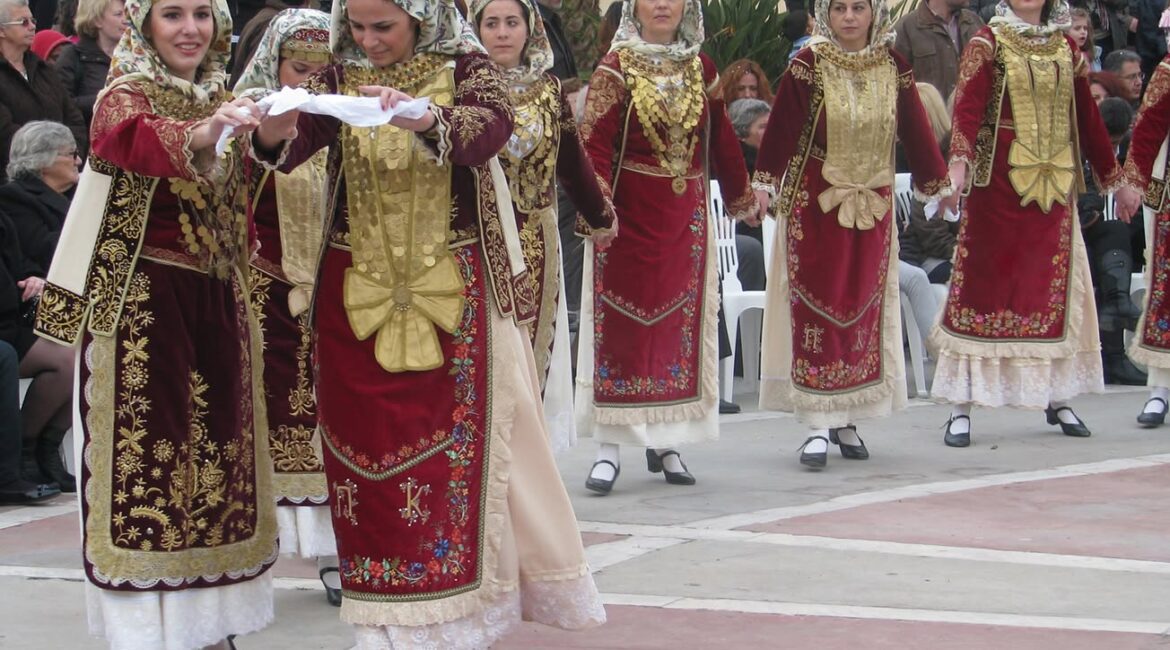
2. “Vale”: Women’s Traditional Dance Ritual in Aspropyrgos, Attica
Performed on Cheese Sunday (the final Sunday before Lent), the “Vale” ritual places women at the centre of a vibrant communal celebration in Aspropyrgos, Attica. Following humorous pre-dance rituals at the square of the 1st Primary School, young women form a large circle, performing Arvanitic dances and singing in the Arvanitic language without musical accompaniment. The event later continues with live local musicians as women dance Kalamatiana and Syrta. The celebration concludes with men joining in to perform festive dances, including the local men’s Apokriatikos Dance.
3. The “Great Fire” Rite on Holy Thursday in Agia Theodora, Arta
A month before Easter, the parish community of Agia Theodora begins gathering wood for this long-standing Holy Week tradition. On Holy Thursday morning, residents of all ages assemble in the village square to construct a large conical wooden structure. During the Service of the Passion, at the reading of the Sixth Gospel and the solemn tolling of the church bell, the Great Fire is ignited—symbolising the fires lit outside the praetorium of Pontius Pilate. The blaze illuminates the Byzantine church of Agia Theodora, creating a powerful and reverent spectacle.
Tags (comma-separated)
Tags:
Arta, Aspropyrgos, Attica, community practices, cultural heritage, Doxato Drama, folklore, Greece, Greek culture, Greek news, intangible heritage, Lina Mendoni, Ministry of Culture, Traditions, UNESCO


0 Comments