
New Mapping Reveals Dozens of Ancient Quarries Beneath Jerusalem

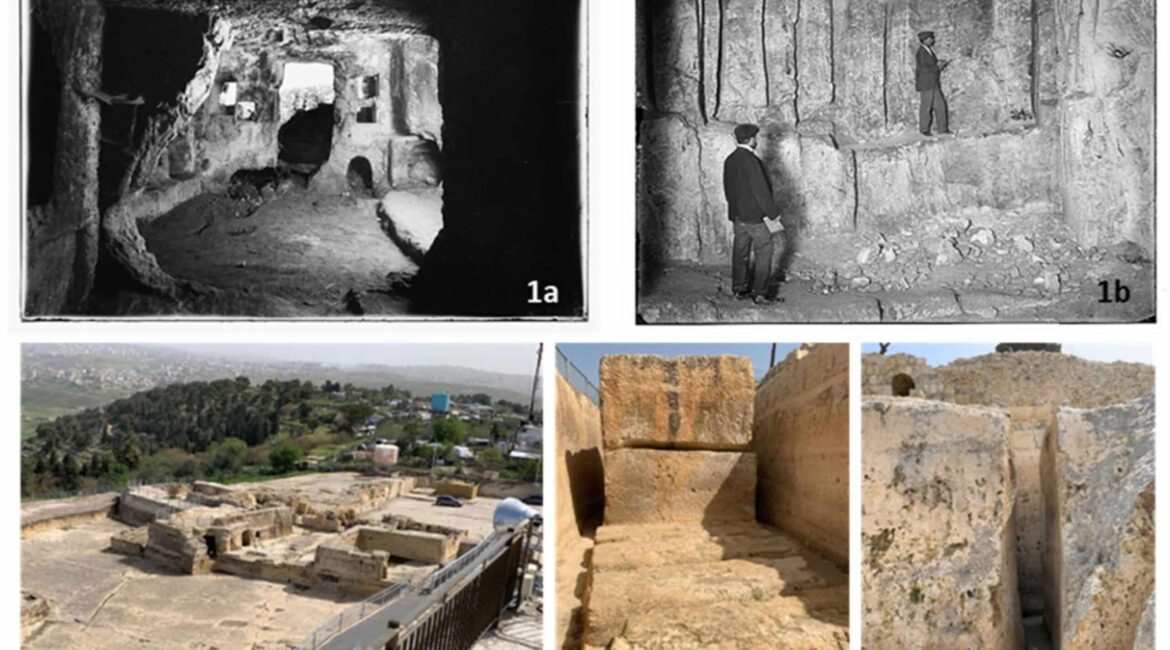
Large-scale “Giant” quarries in Jerusalem. Credit: Adi Sela Wiener / Open Access
Dozens of ancient quarries have been uncovered beneath modern neighborhoods of Jerusalem, revealing how generations of builders extracted the iconic limestone that still shapes the city’s landscape. The discovery sheds new light on the long history of stonecutting in the region and the deep geological and cultural roots of what is commonly known as Jerusalem stone.
The findings come from a new study published in Heritage and are based on 117 excavation reports by the Israel Antiquities Authority, covering work done between 2012 and July 2024. Researchers identified 39 quarry sites within the city’s current boundaries.
Most were found during salvage excavations carried out before construction or infrastructure projects, highlighting how modern development continues to uncover traces of the past.
Lead researcher Adi Sela Wiener, affiliated with both the Bezalel Academy of Arts and Design and Sapienza University of Rome, worked with Italian scholars Laura Medeghini and Gabriele Favero to analyze the data.
Together, they created a spatial database using open-source reports from Hadashot Arkheologiyot, aiming to map early stages of quarrying across the city.
Mapping early stonework: From bedrock to building sites
The research team said that the quarrying process followed a multi-step path starting with identifying suitable rock layers, then cutting and shaping blocks before transporting them to building sites.
The study focused on the first part of that process, offering a detailed mapping of where ancient quarrying activity occurred.
Natural rock with evidence for quarries exposed above street level. Credit: Adi Sela Wiener / Open Access
The highest concentration of large quarry sites was found in northern Jerusalem, where 14 of the 39 locations were identified. Many of these were carved into dense Turonian limestone from the Nezer Formation, a rock type valued for its strength and widely used in historical construction.
Evidence of stonecutting was found at 90 percent of the documented sites, including tool marks and severance channels. At nearly 69 percent of the locations, partially detached stones were still connected to the bedrock. The blocks varied in size, suggesting different construction purposes.
Ancient quarries in Jerusalem reveal multi-period activity
Dating the quarries remains difficult, but researchers were able to assign general timeframes to about 80 percent of the sites.
Quarrying activities stretched from Iron Age II through the Second Temple period, Roman and Byzantine eras, and into the Early Islamic period. Some quarries showed signs of being used in multiple time periods.
The research also notes the continued use of traditional stonecutting terms like “mizzi hilu” and “meleke” among local masons. These refer to specific types of limestone still recognized for paving and fine masonry.
Wiener and her co-authors recommend including detailed stratigraphy, rock sampling, and GIS mapping in future excavation reports. They say these methods can help connect ancient quarry sites to old roads and planning systems, guiding better decisions for both archaeology and development.


0 Comments