
Greek-Jordanian Challenges Stereotypes of Arabic Culture

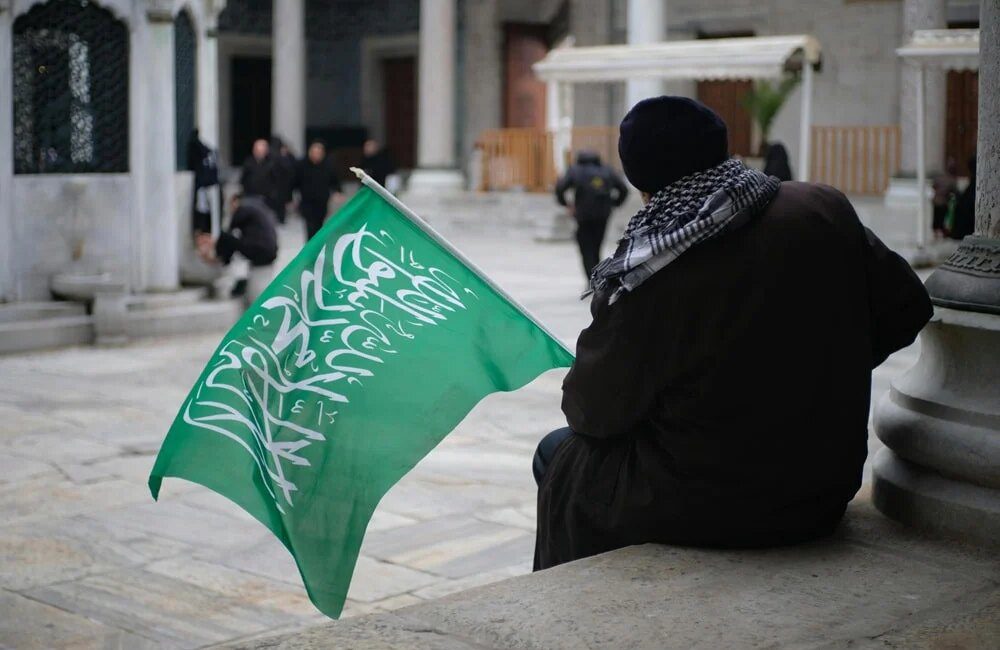
The green flag, featuring the Shahada but without the sword, is a common flag used to represent Islam. Public Domain
A Christian born in Amman, Jordan, to Greek parents, is challenging the way Arabic culture is portrayed in Western media.
By Irina Peridaki
Too often, Arabic culture is portrayed through a narrow lens — one filled with deserts, souks, and conflict. It’s a version designed for convenience rather than understanding. Western media still clings to images of veiled women, rigid traditions, and stern patriarchs, creating a picture that feels distant, even threatening.
But these are fragments, not the full story. What bothers me most is how Arabs are still depicted in much of the media — always the villains, the poor, the uneducated, or the ones causing trouble. It’s a narrow, harmful narrative that has lingered for decades.
In reality, the Arab world is vast, educated, and resilient. Countries like Jordan, for example, have endured political and economic challenges with quiet strength and dignity, balancing tradition and progress.
Yet these stories rarely make it to the screen. When films do touch on the region’s history, they often miss its humanity — the courage, humor, and intelligence that have carried people through difficult times.
Women in Amman, Jordan. Credit: Maya-Anaïs Yataghène, Creative Commons Attribution 2.0/Wikipedia
Arab character reduced to a noisy sidekick
The other day, I watched an American movie set around archaeological excavations in Cairo. The story followed a British woman and an Egyptian man searching for an old clock buried in the sand. The “Egyptian” character kept nagging and talking about food, and when he finally spoke Arabic, it was with a Lebanese accent — almost like a parody. The only word he repeated was “Yallah, Yallah!” which means “Come on!” in Arabic.
To anyone familiar with the language, it was uncomfortable to watch. Once again, an Arab character was reduced to a noisy sidekick — exaggerated, comic, and far from reality.
Each country in the Middle East has its own accent — some heavier than others — yet everyone communicates through classical Arabic, the shared foundation of the language. Algeria and Tunisia, in North Africa, speak a mix of Arabic and Berber dialects, which can be difficult for others to follow.
Arabic culture: Family values and hospitality
Across the region, people’s behavior is rooted in family values: truth, love, and respect for parents. The patriarch traditionally plays a central role in the household, and hospitality is almost sacred.
Credit: Frank’s, CC2/Flickr
Guests are immediately offered Arabic coffee — strong, aromatic, and symbolic. It’s polite to accept, even just a sip, as it signifies openness and goodwill. In some homes, mint tea with sugar replaces coffee — another way to say, you are welcome, you are among friends. Arabic culture thrives on respect and honesty. Once trust is earned, friendships become lifelong.
Born to Greek parents and growing up in Jordan
I speak from experience — a Christian born in Amman, Jordan, to Greek parents. My childhood was joyful and peaceful. My friends were both Christian and Muslim, and there was never animosity between us. It never crossed our minds to ask what religion someone followed — we simply met as friends.
Growing up in Amman, church bells often rang across the city, mingling with the call to prayer from nearby mosques — two sounds that belonged together. At Easter, the children of our neighborhood would gather flowers for the church, our hands full of color and laughter.
It was a time of community, not division. I still remember a moment from my school days when a classmate, with a teasing grin, asked if I had camels parked in my garage. I couldn’t stop laughing — and decided to play along. “Of course not,” I said. “I’ve given them the day off.” Humor, I learned that day, is one of the simplest ways to defuse a stereotype — and the most lasting.
I attended the CMS (Christian Missionary School), where we received an excellent education in Arabic and English, then French. As we grew older, we learned the real meaning of coexistence — through language, shared values, and everyday kindness.
The sound of the minaret calling Muslims to prayer was as natural as church bells on Sunday morning. Before Easter, the neighborhood would grow quiet; the children disappeared indoors, helping their families prepare for ‘Easter’ — a time of reflection, gathering, and celebration. It was a peaceful silence, filled with anticipation and warmth — a reminder that faith, in any form, was something to be lived, not divided.
Sadly, much of this harmony is lost in translation today. The media often shows a different picture. In reality, Arab women dress freely — from jeans to hijab — according to personal choice. The burka is not the rule; it’s a decision made by the individual.
If storytelling is meant to reflect truth, then Arabic culture deserves to be seen through its real colors — through the pride of family, the power of kindness, and the grace of coexistence. Authenticity doesn’t just correct perception; it builds bridges.
Irina Peridaki is a multilingual professional with a background in hospitality and corporate executive support. Born in Amman, Jordan, and of Greek origin, she lived in Dubai for 13 years, gaining deep insight into Arabic culture and cross-cultural communication. She writes short stories and reflective articles that touch people’s lives and explore understanding between cultures — always from a human, not political, perspective.


0 Comments